Airport guide · Updated October 2026
How early to get to the airport
and which deadline really counts
Two hours for domestic, three for international. Everyone knows the rule, and as a default it's fine. But it is only a guess at how long the queues will be. What actually decides whether you fly is two deadlines: when bag drop closes and when the gate closes. Here is what airports and airlines say, where the rule breaks, and how to check your flight before you leave home.
In brief
- The default: Heathrow recommends 2 hours before domestic and European flights and 3 hours before international ones. Most big airports publish much the same.
- Plan from the deadlines, not the departure time. Check-in and bag drop usually close 40–60 minutes before departure. At Berlin BER the gate closes, as a rule, 30 minutes before.
- Hand luggage only saves you the desk, not the security queue. That's why Frankfurt suggests about 2 hours for an EU flight with hand luggage and about 2.5 with a checked bag.
- Ryanair is moving its deadline. From 10 November 2026 its airport check-in and bag drop close 60 minutes before scheduled departure instead of 40.
- Leaving the Schengen area on a non-EU passport? The EU's Entry/Exit System has been fully running since 10 April 2026, and your fingerprints and face are checked at every border crossing, on the way out too.
What airports actually recommend
Airports publish their own advice, and it varies more than the two-and-three rule suggests. Here is what a few of them say on their own sites.
| Airport | Domestic / short-haul | International / long-haul |
|---|---|---|
| London Heathrow | 2 hours (UK and Europe) | 3 hours |
| Frankfurt | About 2 hours (EU, hand luggage only), about 2.5 hours (EU, checked bag) | At least 3 hours (non-EU) |
| Málaga (Aena) | 2 hours (domestic and Schengen) | 3 hours (non-Schengen) |
| Bilbao (Aena) | 1.5 hours (Schengen) | 3 hours (non-Schengen) |
| Toulouse-Blagnac | 1.5 hours | 2 hours |
The pattern is clear. Big hubs and anything that involves passport control get 3 hours. Smaller regional airports are comfortable with 90 minutes. In the US, the TSA's 2026 advice for Colorado's airports is to arrive at least two hours before your flight.
Frankfurt adds a caveat I like: these are guideline values, and arriving too early can mean unnecessary waiting. Three hours before a flight from a quiet regional airport is mostly time spent buying expensive water.
The two deadlines that actually matter
A recommended arrival time is a forecast. The deadlines are rules: miss them and the airline can refuse to carry you, even while the plane is still at the stand.
| What closes | Usually | Example |
|---|---|---|
| Check-in and bag drop | 40–60 minutes before departure | Ryanair: 40 minutes, 60 minutes from 10 November 2026 |
| Boarding gate | Around 30 minutes before departure | Berlin BER: as a rule 30 minutes before |
| Extra security check | Depends on the route | BER, flights to Israel and the USA: a second check opens 2 hours and closes 30 minutes before departure |
Your exact times are on the booking, the boarding pass and in the airline's app. Look them up the evening before and plan around the earliest one that applies to you. With a bag, that's bag drop. Without one, it's the gate.
One more trap: deadlines count from the scheduled departure. Ryanair's new rule, for example, is 60 minutes before scheduled departure. A delay on the board doesn't automatically move it.
Hand luggage vs checked bags
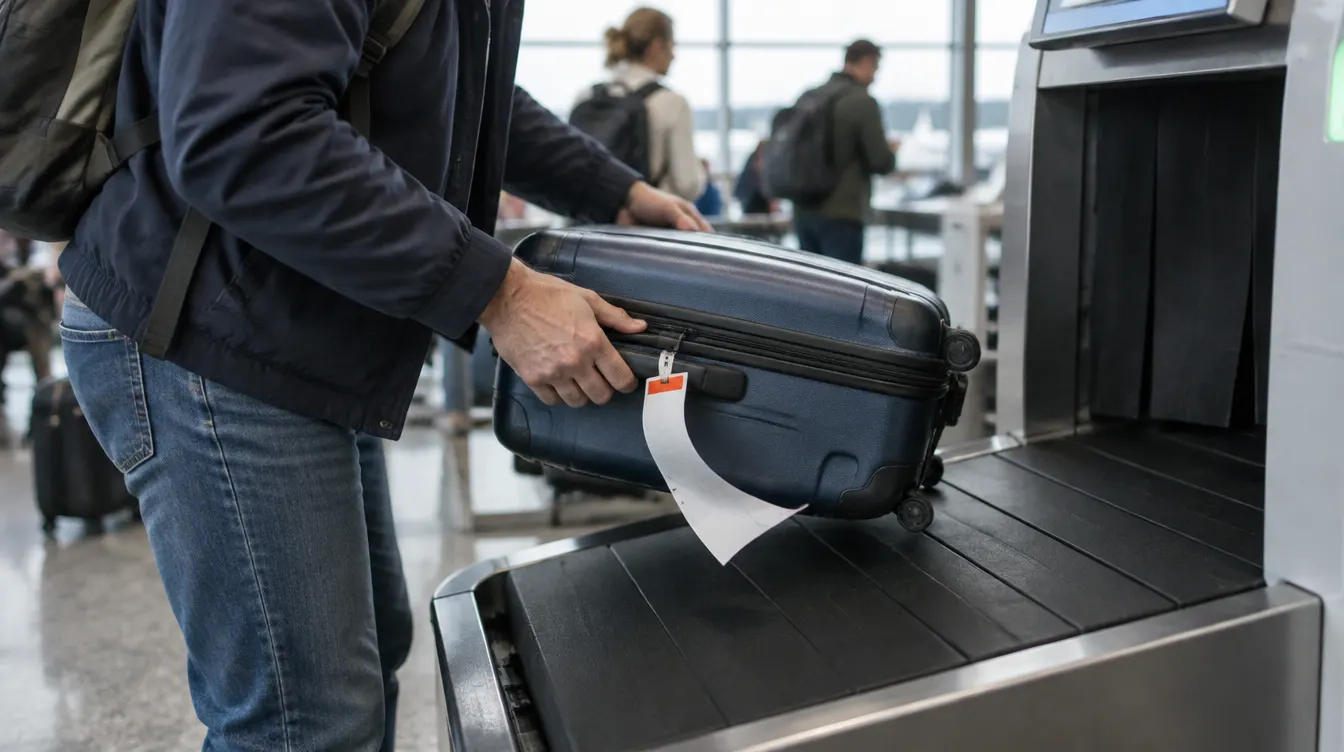
This is the biggest single variable. Heathrow says that if you've printed your boarding pass and aren't checking a bag, you can go straight to security. Aena says the same for Bilbao. The check-in desk is the one queue you can skip entirely.
Frankfurt puts a number on it: about 2 hours for an EU flight with hand luggage only, about 2.5 hours with a checked bag. Half an hour is a fair estimate for the bag-drop queue on an ordinary day.
If you do check a bag, look for self-service. Ryanair says over 95% of its airports would have self-service bag-drop kiosks by October 2026, linked to its app. Some airports also take bags the evening before: at Berlin BER, Lufthansa, Austrian, Swiss and Brussels Airlines run an evening check-in in Terminal 1 from 17:00 to 19:30, up to 23 hours before departure.
When to add time
- Leaving Schengen on a non-EU passport. Since 10 April 2026 the Entry/Exit System is used at all external Schengen borders, and fingerprints and facial images are checked at each crossing. Berlin BER asks passengers on non-Schengen departures to allow extra waiting time for passport control.
- Flights to the USA or Israel from BER. There is a second security check, and it closes 30 minutes before departure.
- Peak days. In summer, Sundays tend to be the busiest screening days at Denver, and on 6 July 2025 TSA screened over 99,000 travellers there. I'd treat holiday weekends anywhere the same way.
- Temporary measures. Airports sometimes raise their advice for a few weeks. Moscow Vnukovo asked passengers to come 3 hours before domestic and 3.5 hours before international flights from 30 April to 12 May 2025 because of tighter security.
- Getting there. The TSA counts parking, returning a rental car and taking a shuttle as part of the time to allow, before you even reach the airline.
Some airports let you book the security queue. Frankfurt's FRA SmartWay lets you reserve a time slot for security free of charge. If your airport offers something similar, it's the cheapest time you will ever save.
Count backwards: a routine that works
- Find your deadline. Bag drop if you check a bag, the gate if you don't. Both are in the airline's app or on the boarding pass.
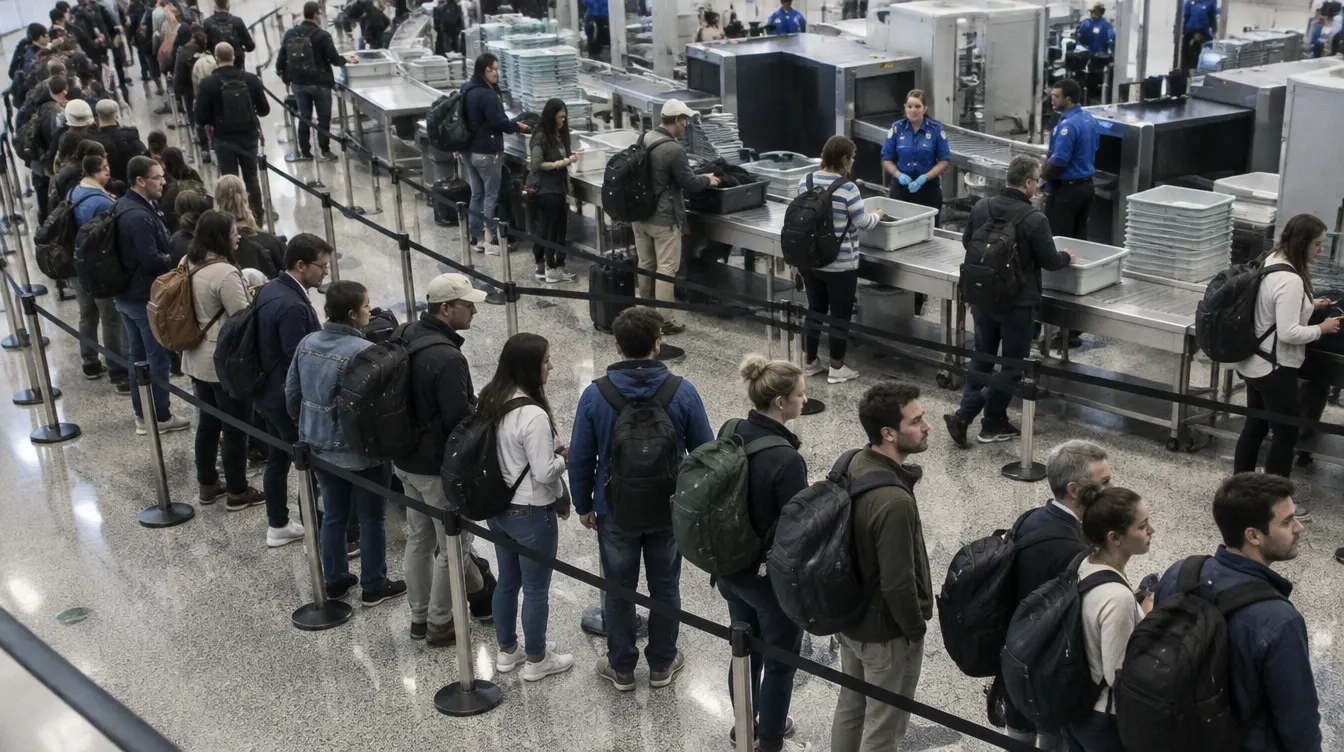
- Add the airport. Security, passport control if you are leaving Schengen or the country, and the walk to the gate. At a big hub, this is where I budget most generously.
- Add a buffer. I add half an hour on a normal day and more on peak days. That's roughly how you end up at the two-and-three-hour rule anyway.
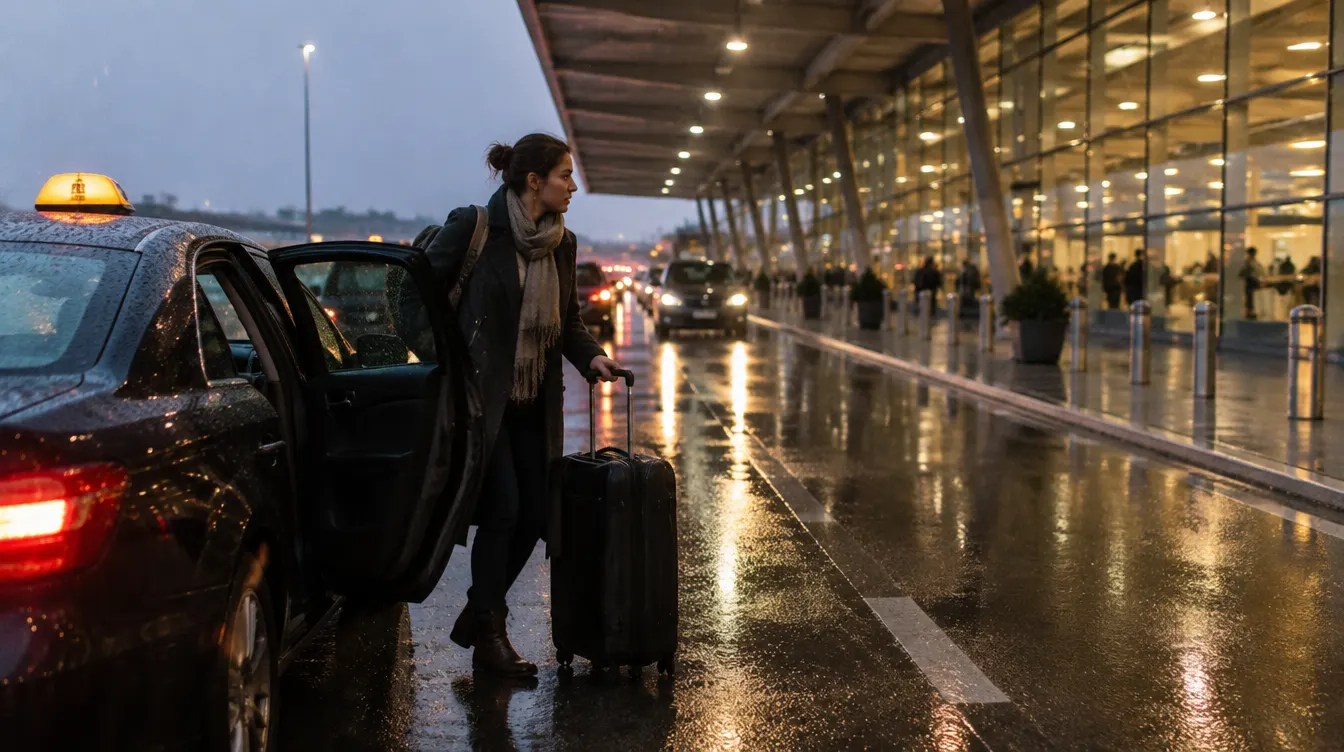
- Add the journey. Door to terminal, with the traffic you'd realistically get at that hour, not the empty-road estimate.
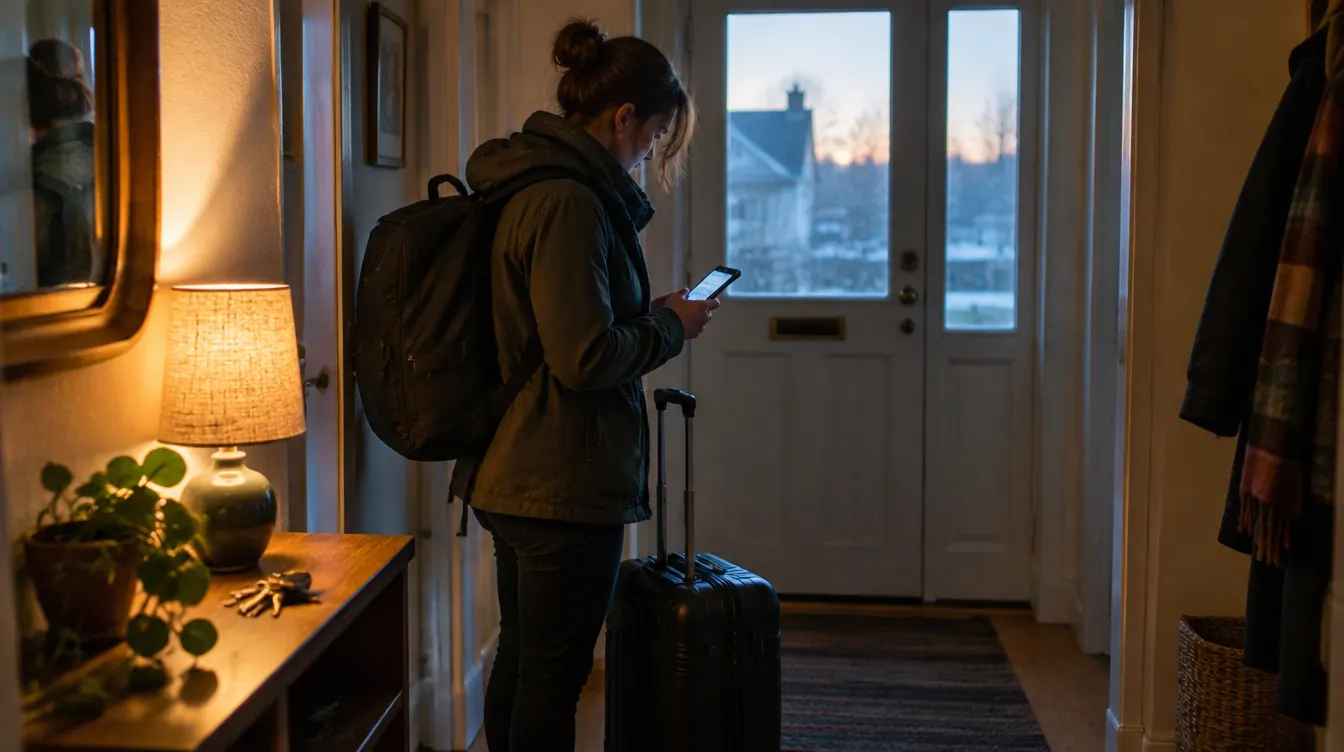
- Check the flight before you leave. Status, terminal, delays: one look at your phone before the taxi comes.
Check your flight before you leave home
A delayed flight looks like a gift: more time at home. Be careful with it. Deadlines count from the scheduled time, and a delay can shrink again. I treat a delay as a reason to relax at the airport, not to leave later, unless the airline itself tells me to come later.
What a quick check before leaving is really good for: a cancellation (rebook from the sofa, not from the back of a queue), a delay of several hours, a terminal change. If the delay is long, know what you're owed: see our guide to flight delays in the EU.
Where Bordy fits
This is the moment I built Bordy for. Add your flight by its number and Bordy re-checks it every two minutes from FlightAware's data while it's active. You get a push when departure is delayed (with the old and new time), when the gate changes, at boarding, at departure and on landing. All of that is free, with no limit on the number of flights, and so is calendar sync.
Pro adds something useful right before you leave: where the aircraft for your flight is right now. If it hasn't left its previous airport yet, a delay is likely before it appears on the board. Pro also puts the gate, terminal, seat and boarding time on the flight's boarding-pass card.
The honest limits: Bordy doesn't predict delays and knows nothing about the queue at your security checkpoint. It shows what the airline and airport have published, and it's a tracker, not a boarding pass. Once you're airside, our guide to finding your gate takes over.
Questions people actually ask
How early should I get to the airport for a domestic flight?
How early should I arrive for an international flight?
Is one hour enough with hand luggage only?
When does Ryanair bag drop close?
My flight is delayed. Can I get to the airport later?
Where these numbers come from
- Heathrow: Checking in — checked 13 October 2026
- Frankfurt Airport: Travel guide (arrival times, FRA SmartWay) — checked 13 October 2026
- Ryanair: airport check-in and bag drop to close at 60 minutes from November 2026 (press release, 22 April 2026) — checked 13 October 2026
- Berlin Brandenburg Airport: FAQ (non-Schengen, second security check, gate closing) — checked 13 October 2026
- Berlin Brandenburg Airport: Check-in and boarding (in German) — checked 13 October 2026
- Aena, Málaga-Costa del Sol Airport: Departures area — checked 13 October 2026
- Aena, Bilbao Airport: Departures area (in Spanish) — checked 13 October 2026
- Toulouse-Blagnac Airport: Check-in — checked 13 October 2026
- TSA: TSA ready for busy summer travel season at Colorado airports (19 May 2026) — checked 13 October 2026
- European Commission: the Entry/Exit System will become fully operational on 10 April 2026 — checked 13 October 2026