Passenger rights · Updated October 2026
Missed your connection:
who rebooks, and what you're owed
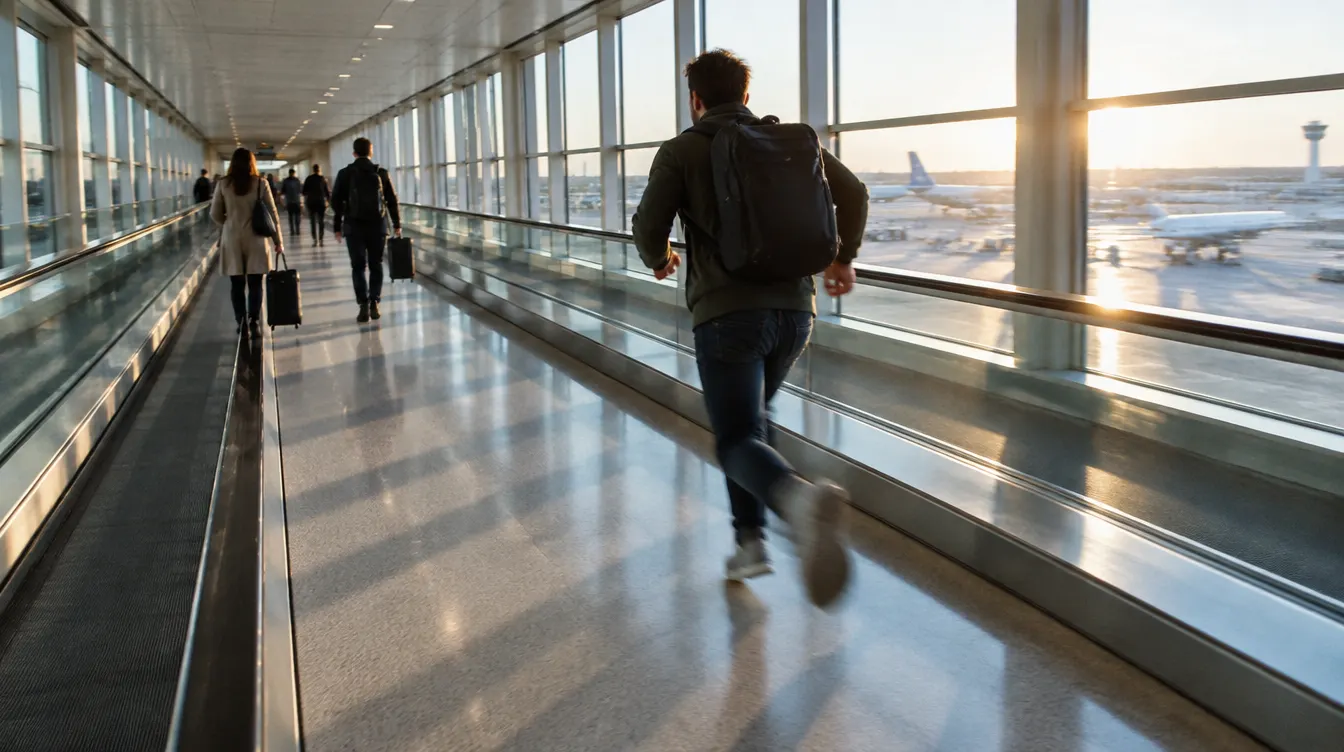
The first flight lands late, the onward one is already boarding three piers away, and you're doing the airport sprint with a backpack. Whether this ends with a free seat on the next flight and €600, or with you buying a new ticket at the counter, depends almost entirely on one thing you decided weeks ago: whether both flights were on the same booking.
In brief
- One booking (one reservation, even with different airlines on it): getting you to your final destination is the airline's problem. It owes you a refund or rerouting, meals while you wait and a hotel if you're stuck overnight.
- Compensation under EU rules of €250, €400 or €600 if you reach your final destination 3 hours or more late, measured on the distance from your first airport to your last, unless the airline proves extraordinary circumstances.
- Separate tickets (self-transfer): the second airline owes you nothing if you miss its flight because the first was late. You rebook and pay yourself.
- Missed it because of the security queue or because you weren't at the gate in time? No compensation, even on one booking.
- At the airport: check the airline app first, then go to the transfer desk, not the check-in hall.
One ticket or two? Check before anything else
Open your booking confirmation. If both flights sit under one reservation number, you have what EU law calls a connecting flight. It doesn't matter that the legs are flown by different airlines. In 2022 the EU Court of Justice ruled that flights combined by a travel agency with one overall price and one ticket count as a single connecting journey too.
Two confirmations, two booking codes, maybe bought on two different websites? That's a self-transfer. Every flight is its own contract, and the second airline has no idea you were ever on the first one.
| One booking | Separate tickets | |
|---|---|---|
| Who rebooks you | The airline, free | You, at your cost |
| Meals and hotel while you wait | Yes, under EU and UK rules | No statutory right |
| Compensation for arriving late | Yes, 3+ hours at final destination | Only for the delayed flight itself |
| Checked bags | Usually tagged through to the end | Collect and check in again |
On one booking: what the airline owes you
Under EU Regulation 261/2004, what counts is how late you reach your final destination, not where the delay happened. A 40-minute late departure that makes you miss a long-haul connection and land six hours late is a six-hour delay. The amount is set by the straight-line distance from the first departure airport to the final one. So Lyon → Amsterdam → New York is priced as Lyon – New York, well over 3,500 km: €600, or €300 if you arrive between 3 and 4 hours late.
The rules cover journeys that start in the EU, Iceland, Norway or Switzerland, including connections outside Europe on a non-EU airline: the Court has confirmed this for a delay on the non-EU leg. If both your first airport and your final destination are outside the EU and you only change planes in Frankfurt or Paris, EU rules don't apply, even on a European airline.
Flying from the UK? The CAA says that on a booking with two or more flights, the airline must give you care if a delay on the first flight makes you miss the second, and compensation is £220, £350 or £520 (£260 if you're 3–4 hours late on a long-haul trip). For the full EU picture, including extraordinary circumstances and how to claim, see our EU261 delay guide.
One trap: an airline can't refuse to board you on the second flight just because it assumed you wouldn't make the connection. The EU Court treats that as denied boarding, which has its own compensation.
At the transfer desk, step by step
- Check the app before you queue. Many airlines rebook missed connections automatically. Finnair, for example, says passengers get their new flight in its app or by text. If a new boarding pass is already there, you may not need the desk at all.
- Go to the transfer desk airside. Don't walk out through passport control to the check-in hall. Frankfurt and Helsinki both hand out boarding passes for connecting flights at their transfer desks.
- Know your options. You can choose rerouting at the earliest opportunity, rerouting on a later date that suits you, or a refund. Once you choose one, you give up the other two, so don't take the first seat offered if a better route exists.
- Ask for meal vouchers and, if needed, a hotel. Under EU rules you also get two phone calls or emails. If nobody offers, pay what's reasonable and keep the receipts.
- Ask where your bag is going. Bags tagged to the final destination normally follow you onto the new flight, but it's worth checking it's rerouted.
- Collect evidence for the claim. Screenshot the arrival time of the first flight and the time you finally land. Keep the boarding passes.
Separate tickets: you're on your own
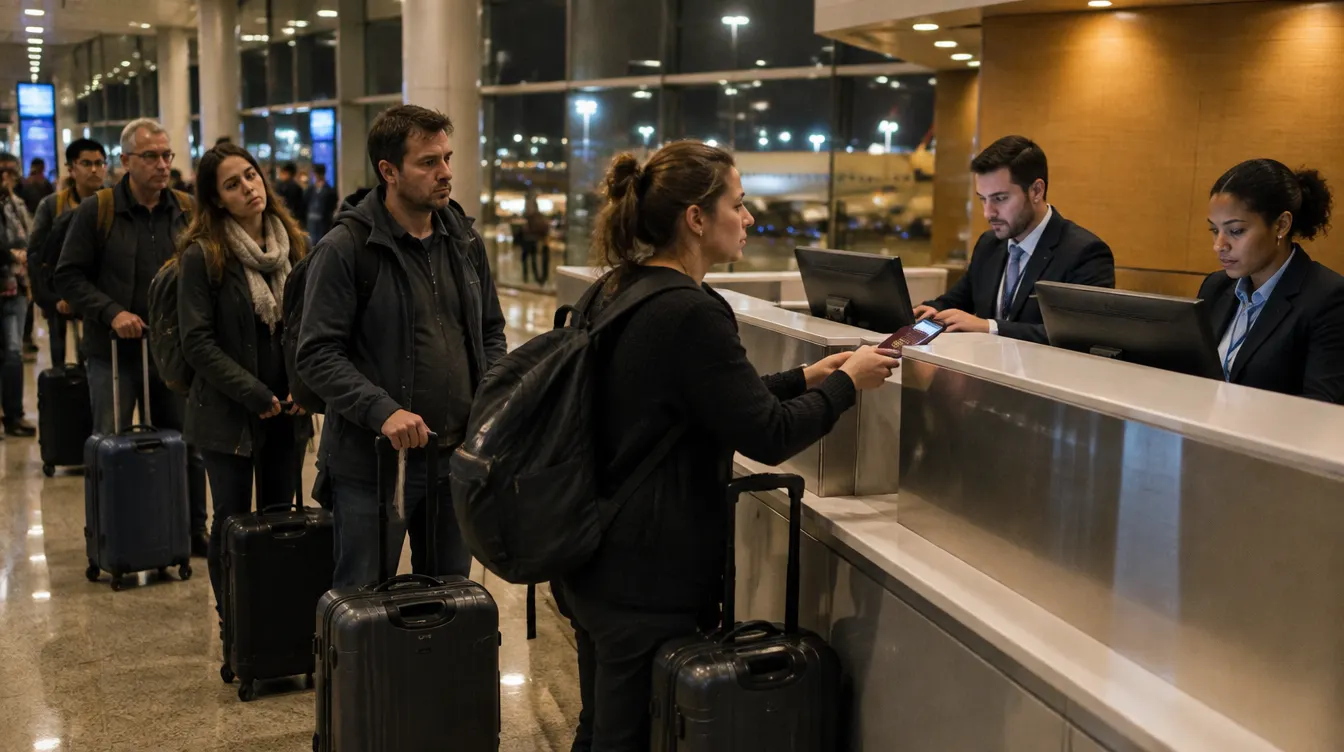
The UK CAA puts it bluntly: on a self-transfer journey you have no statutory right to care, compensation or transport to your final destination if a delay makes you miss a flight. The second airline will treat you as a no-show. You'll need a new ticket, often at a walk-up price.
You still have rights against the airline that was late: EU compensation if that flight alone arrived 3+ hours late, and under the Montreal Convention a claim for proven damage caused by the delay, capped at 6,303 Special Drawing Rights since December 2024. The airline escapes it if it shows it took all reasonable measures, so I wouldn't plan a trip around winning that argument.
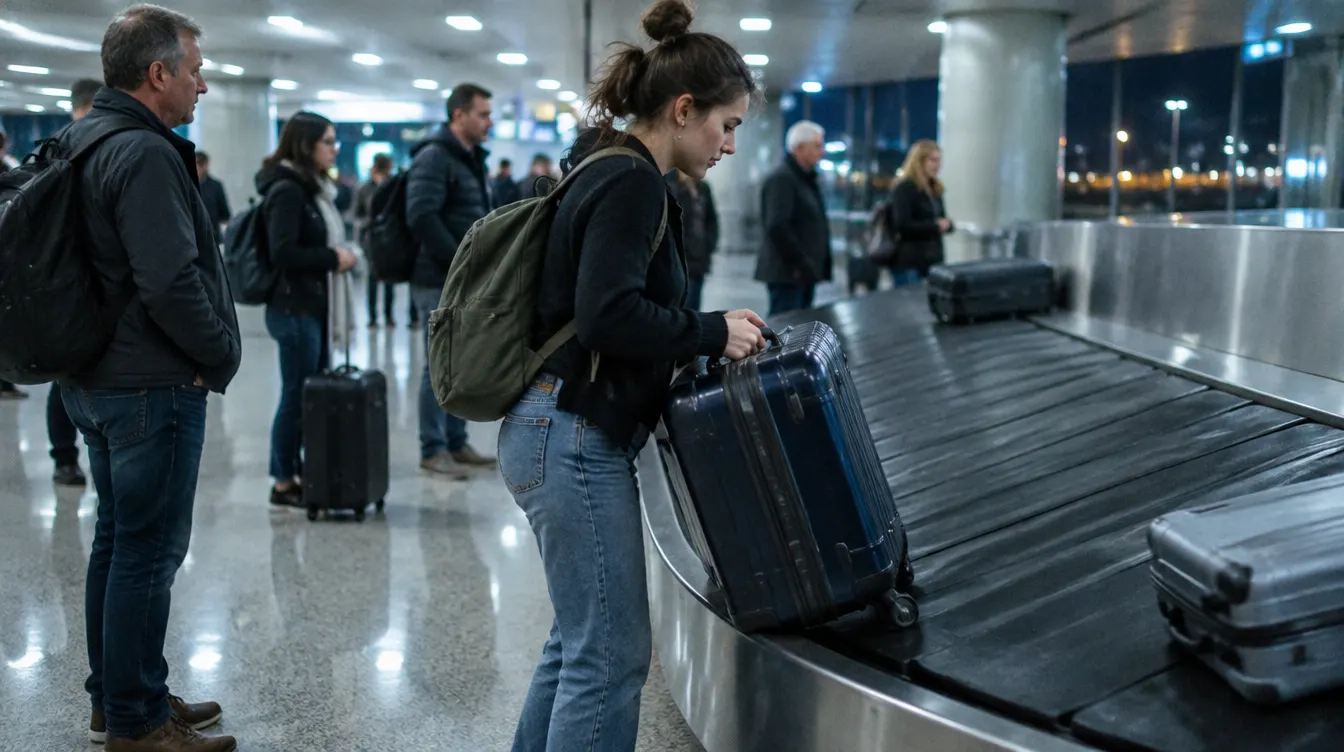
There's also the bag. On separate tickets nothing is checked through: you go landside, wait at the carousel, check in again and clear security again. At Madrid-Barajas, Aena warns that changing between Schengen and non-Schengen areas can mean entering Spain, so you need the documents for that country too.
Minimum connection time, and how much to add
Every hub publishes a minimum connection time (MCT): the shortest gap an airline is allowed to sell on one booking. It depends on terminals and passport control. Here is Helsinki, as Finnair publishes it:
| Connection | Minimum |
|---|---|
| Within Finland or within Schengen | 35 min |
| Non-Schengen to non-Schengen | 40 min |
| Schengen to non-Schengen | 40 min |
| Non-Schengen to Schengen | 45 min |
| From a charter flight | 75 min |
On one booking, a tight connection at MCT is the airline's risk, not yours. On separate tickets nobody checks anything, and Finnair itself tells self-transfer passengers to allow significantly longer. My rule: on a self-transfer I'd leave at least enough time to survive one ordinary delay, plus the carousel and a second security check. If that sounds like half a day, book one ticket instead.
Where Bordy helps
A missed connection is mostly a race against information. The sooner you know the first leg is slipping, the sooner you can ask the airline about another route, while there are still seats on it.
In Bordy you add both legs by flight number. The app re-checks each one every two minutes from FlightAware's data and sends a push when the departure moves, with the old and new time, when the gate changes, at boarding and at landing. So when you switch off flight mode after landing, any delay or gate change on your onward flight is already waiting for you. Alerts are free, with no limit on flights. Pro adds where the aircraft for your next flight is right now: if it's late too, your connection may still be on. Bordy doesn't rebook you or file claims, so keep your own screenshots.
Questions people actually ask
What happens if I miss my connecting flight because the first flight was late?
Do I get compensation for a missed connection on separate tickets?
Who rebooks me, the first airline or the second?
How is compensation calculated for a connecting flight?
What is a minimum connection time?
Where these numbers come from
- Your Europe: air passenger rights (connecting flights, rerouting, assistance) — checked 15 October 2026
- European Commission: summary of the most relevant CJEU judgments on air passenger rights (PDF) — checked 15 October 2026
- CJEU press release 166/22, case C-436/21 (connecting flights by separate airlines) — checked 15 October 2026
- UK Civil Aviation Authority: delays — checked 15 October 2026
- Finnair: connecting flights at Helsinki Airport — checked 15 October 2026
- ICAO: Montreal Convention liability limits from 28 December 2024 — checked 15 October 2026
- Aena: connecting flights at Adolfo Suárez Madrid-Barajas — checked 15 October 2026