On board · Updated November 2026
The best seat on a plane,
and how to find it on the seat map
Most of us choose a seat in about four seconds, on a tiny seat map, while the airline tries to sell us travel insurance. Then we spend three hours living with it. What makes a seat smooth, quiet, good for sleep or quick to leave is mostly physics and cabin layout, and you can read both before you pay. Here is where to sit for each, and how to check the map for the aircraft you are actually flying on.
In brief
- Least turbulence: over the wing, close to the aircraft's centre of gravity. The back of the cabin moves the most.
- Quietest: ahead of the engines and away from galleys and toilets. On most airliners that means the front half of the cabin.
- Best for sleep: a window seat, away from galleys, toilets and the last row.
- Quickest off the plane: as far forward as you can, on the aisle.
- Most legroom: an exit row or a bulkhead row, both with strings attached.
- Before you choose: find your aircraft type in the booking and look at that exact layout. Then check again before the flight, because aircraft get swapped.
Least turbulence: sit over the wing
In turbulence an aircraft pitches and rolls around its centre of gravity, which sits close to the wing. The further you are from that point, the bigger the arc you ride. Think of a seesaw: the middle barely moves, the ends do all the work.
The US National Transportation Safety Board looked at this in its 2021 report on turbulence injuries. It cites NASA flight tests on a Boeing 757 where loads at the aft galley were 40% higher than at the centre of gravity, and 12% higher at the pilots' seats. The NTSB is honest that those results were never published and may not apply to other types. But the pilots and flight attendants it interviewed all said the same thing: turbulence is usually worst at the back.
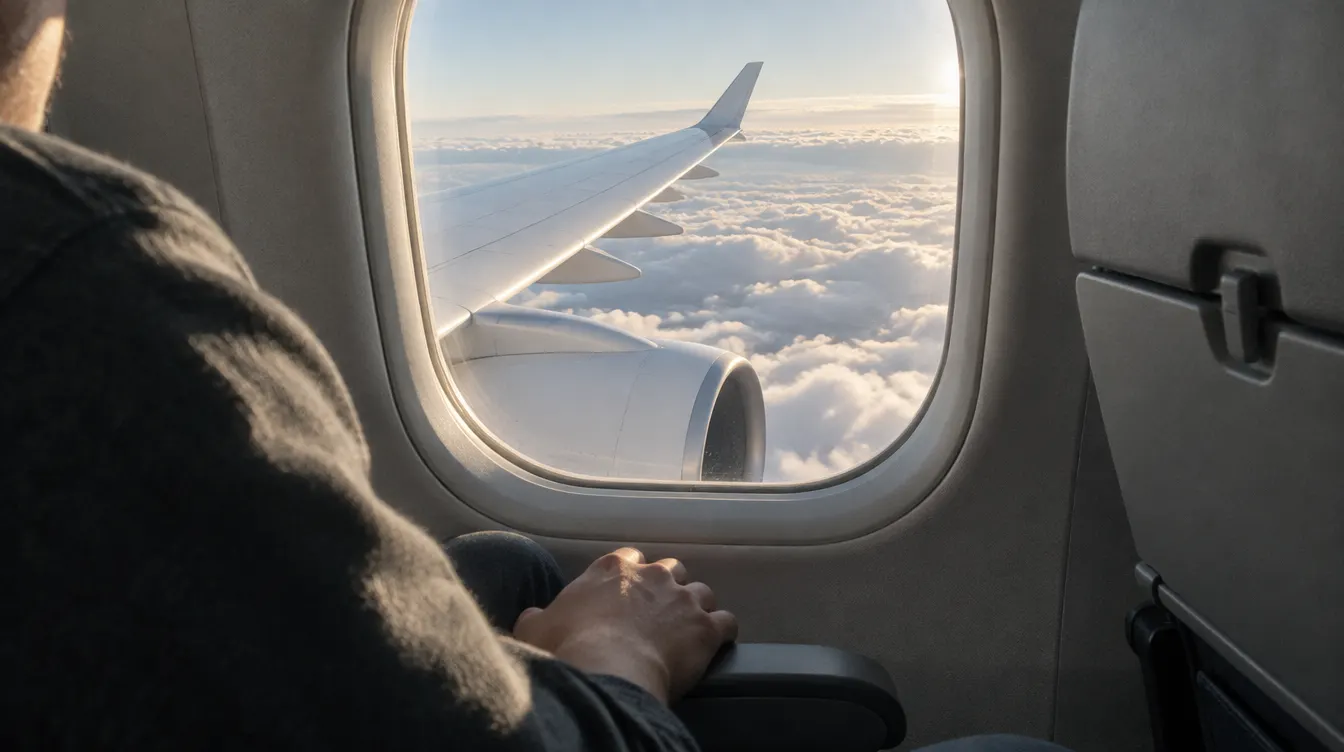
The easy landmark on a seat map is the overwing exits. On an Airbus A320 or a Boeing 737 they sit above the wing by definition, so a seat a row or two either side of them is about as smooth as economy gets.
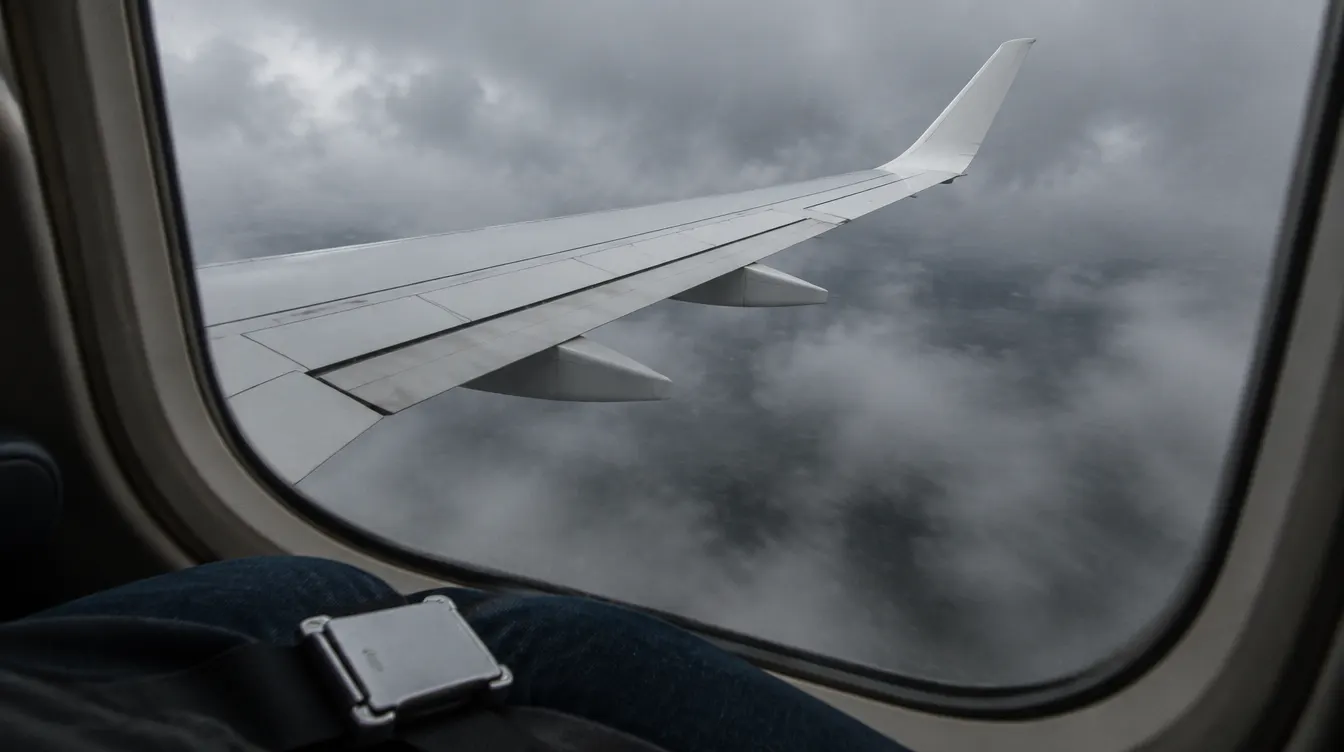
That caption is the real lesson. Row number changes how bumpy it feels; a fastened belt decides whether you get hurt. I keep mine loosely on whenever I'm seated, sign or no sign.
Quietest: ahead of the engines
On most airliners the engines hang under the wings, so the loudest seats are beside them and just behind them. Sit forward of the wing and most of the engine noise is behind you. On regional jets with the engines on the tail, such as the Bombardier CRJ, it flips: the back is the loud end.
Researchers at the German Aerospace Center (DLR) found that seat position, front, middle or rear, changes the character of cabin noise, not just its volume, and that both affect how comfortable passengers feel. Engines are not the only source, either. Galleys clatter, toilets flush, and queues form next to both. Two or three rows away from them is worth more than an extra inch of recline.
Best for sleep: a window, away from the traffic
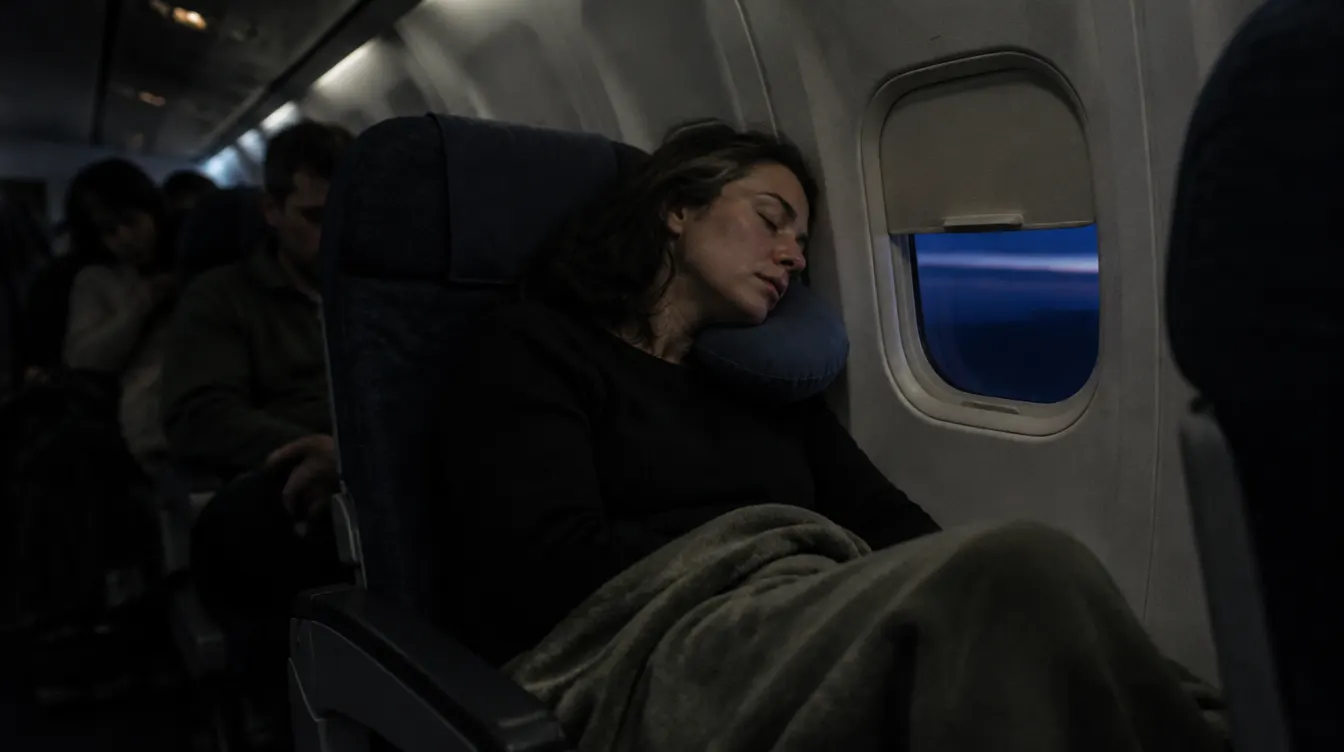
A window seat gives you a wall to lean on and nobody climbing over you at 3 a.m. Pick one away from galleys and toilets, and avoid the last row: those seats often don't recline because there is a wall behind them. The row in front of an exit row can have limited recline too, and decent seat maps flag it.
If you get up a lot, though, take the aisle. Sleep is no use if you have to wake two strangers every time.
Most legroom: exit rows and bulkheads
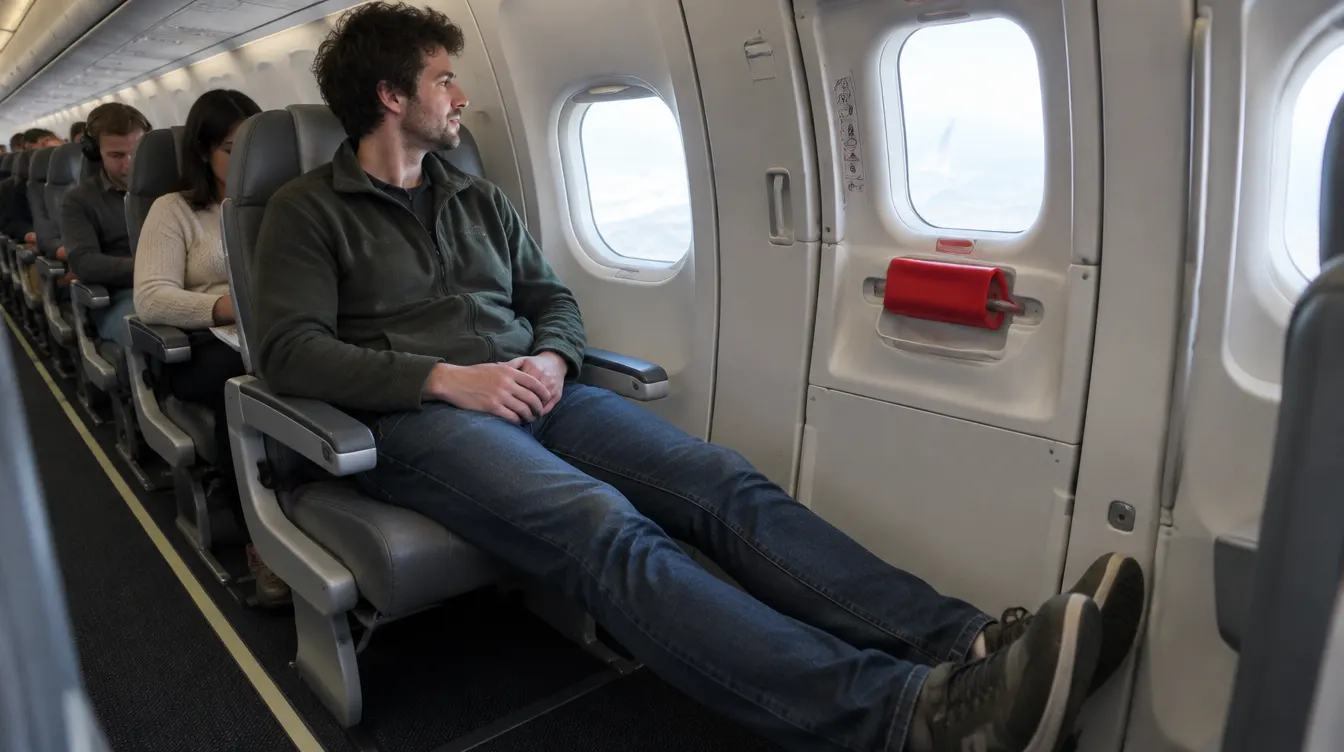
Exit rows usually have the most legroom in economy, and many airlines charge for them. They come with conditions. In the US, federal rule 14 CFR 121.585 bars anyone under 15, anyone who couldn't open the exit or follow crew commands, and anyone looking after a small child. You can also ask to be moved without giving a reason. In Europe, EASA rules say these seats should go to passengers who look reasonably fit, strong and willing to help in an evacuation, and that they get an extra briefing on the exit.
The exact limits are the airline's call. Finnair, for example, seats passengers aged 12 and over who speak English or Finnish, and doesn't allow seat belt extenders there. Read the conditions on the seat selection screen before you pay: if you don't qualify, the crew will move you.
Bulkhead rows, the first row behind a wall or curtain, have no seat in front. Nobody reclines into your knees, but there is also nowhere under a seat for your bag during takeoff and landing, and the tray table is usually in the armrest. Bulkheads are also where baby bassinets are usually fitted, which is worth knowing if sleep is the goal.
Quickest off: front and aisle
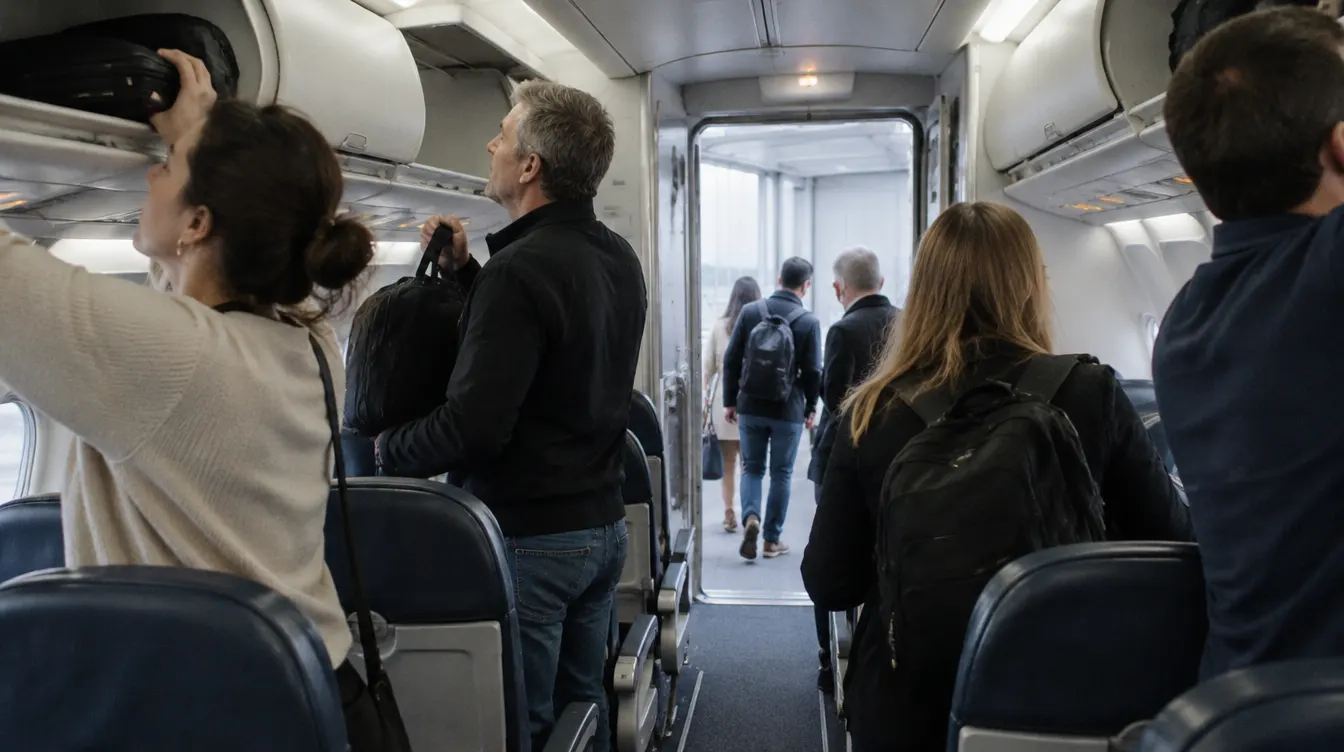
At a jet bridge everyone leaves through the front door, row by row. Every row between you and that door is more time standing in the aisle with your bag. With a tight connection or a train to catch, sit as far forward as you can, on the aisle, and put your bag in the bin above you or ahead of you, never behind.
When the airport uses stairs, the rear door sometimes opens too and the back empties at the same time. You can't count on that when booking. For how much time you really need between flights, see the guide to minimum connection times.
Which seat for what
| What you want | Where to sit | The catch |
|---|---|---|
| Least turbulence | Over the wing, near the overwing exits | Engine noise; the view is mostly wing |
| Quiet | Front of the cabin, ahead of the engines | Often sold as paid seats |
| Sleep | Window, away from galleys and toilets | You climb over people to get out |
| Quick exit | Front rows, aisle seat | Often sold as paid seats |
| Legroom | Exit row or bulkhead | Rules on who may sit there; bag goes in the overhead bin |
| Getting up freely | Aisle seat | Trolleys and neighbours bump your elbow |
How to check the seat map for your aircraft
- Find the aircraft type. It is in your booking or the flight details on the airline's site, often as a short code. Flight trackers such as Flightradar24 and FlightAware also show which type usually operates the flight.
- Open the airline's own seat map, at booking or in “manage booking”. It is the only map that shows which seats are free, which are paid and where the exits are on this particular flight.
- Cross-check on aeroLOPA. It has detailed seat plans by airline and aircraft, with pitch and recline, flags seats to avoid, and lets you search by flight number and date.
- Use the wing as your landmark. Overwing exits mark the wing on the map; count rows forward or back from there.
- Check again before departure. Airlines swap aircraft, and a different type or layout can move you to another seat. Look at your seat once more when online check-in opens.
The codes are shorthand: 320 is an Airbus A320, 32N an A320neo, 738 a Boeing 737-800, 7M8 a 737 MAX 8. One airline can fly two very different layouts of the same type, so its own seat map beats any generic one.
Where Bordy comes in
Bordy doesn't sell seats and won't choose one for you. I built it for what happens after you've chosen. Add your flight by number and it re-checks the status every two minutes from FlightAware's AeroAPI data, then sends a push when the gate changes, when departure moves (with the old and new time), at boarding and at landing. That part is free, with no limit on flights.
Bordy Pro puts your seat, gate, terminal and boarding time on the boarding-pass card itself, and adds the aircraft's registration, operator and photo, so you can see which plane is actually doing your flight. It also shows where that aircraft is right now. It won't warn you that the airline moved your seat, so after a swap the airline's app is still the place to check. Pro costs €44.99 a year with a three-day free trial, or €1.99 a week. After landing, the flight goes on your world map and its aircraft type into your statistics.
Questions people actually ask
Where is the best seat on a plane to avoid turbulence?
What is the quietest seat on a plane?
How old do you have to be to sit in an exit row?
How do I see the seat map for my flight?
Can my seat change after I've chosen it?
Where these numbers come from
- NTSB: Preventing Turbulence-Related Injuries in Air Carrier Operations (Safety Research Report SS-21-01, 2021, PDF) — checked 5 November 2026
- 14 CFR § 121.585, Exit seating (Cornell LII) — checked 5 November 2026
- EASA: AMC1 and GM2 CAT.OP.MPA.165 Passenger seating (Decision 2017/008/R, PDF) — checked 5 November 2026
- Finnair: conditions for seats next to emergency exits — checked 5 November 2026
- Pennig, Quehl, Rolny (DLR): Effects of aircraft cabin noise on passenger comfort, Ergonomics, 2012 — checked 5 November 2026
- aeroLOPA: aircraft seat maps by airline — checked 5 November 2026