Travel rules · Updated November 2026
Liquids in hand luggage:
the 100 ml rule in 2026
For years the rule was simple and annoying: nothing over 100 ml, everything in one clear bag. In 2026 it's no longer simple. Some airports now let you walk through with a two-litre bottle still in your backpack, others never stopped asking for the little bag, and a few lifted the limit and then had it put back. Here's where things stand, airport by airport, plus the exceptions that apply everywhere: medicine, baby food and duty-free.
In brief
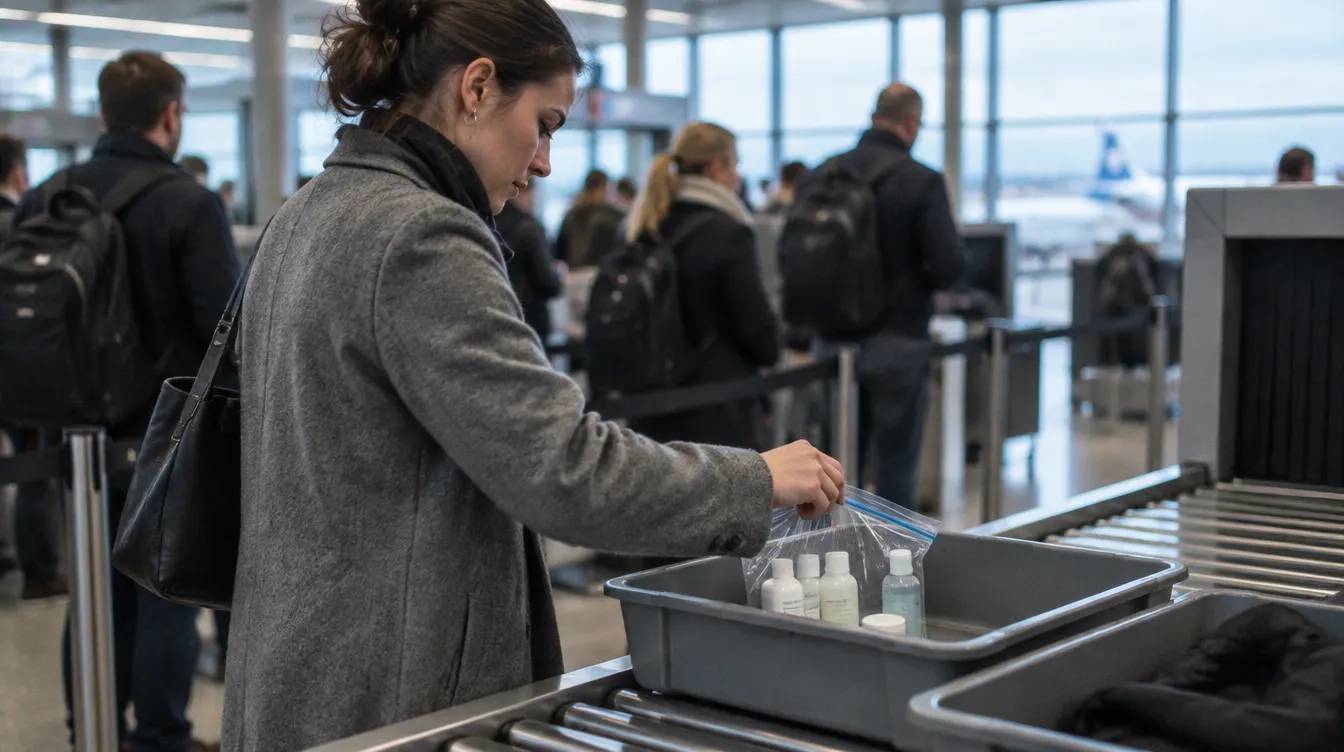
- The default is still 100 ml. In the EU, the UK, the US and Russia the baseline rule is containers of up to 100 ml in one transparent, resealable bag of about 1 litre, one bag per passenger.
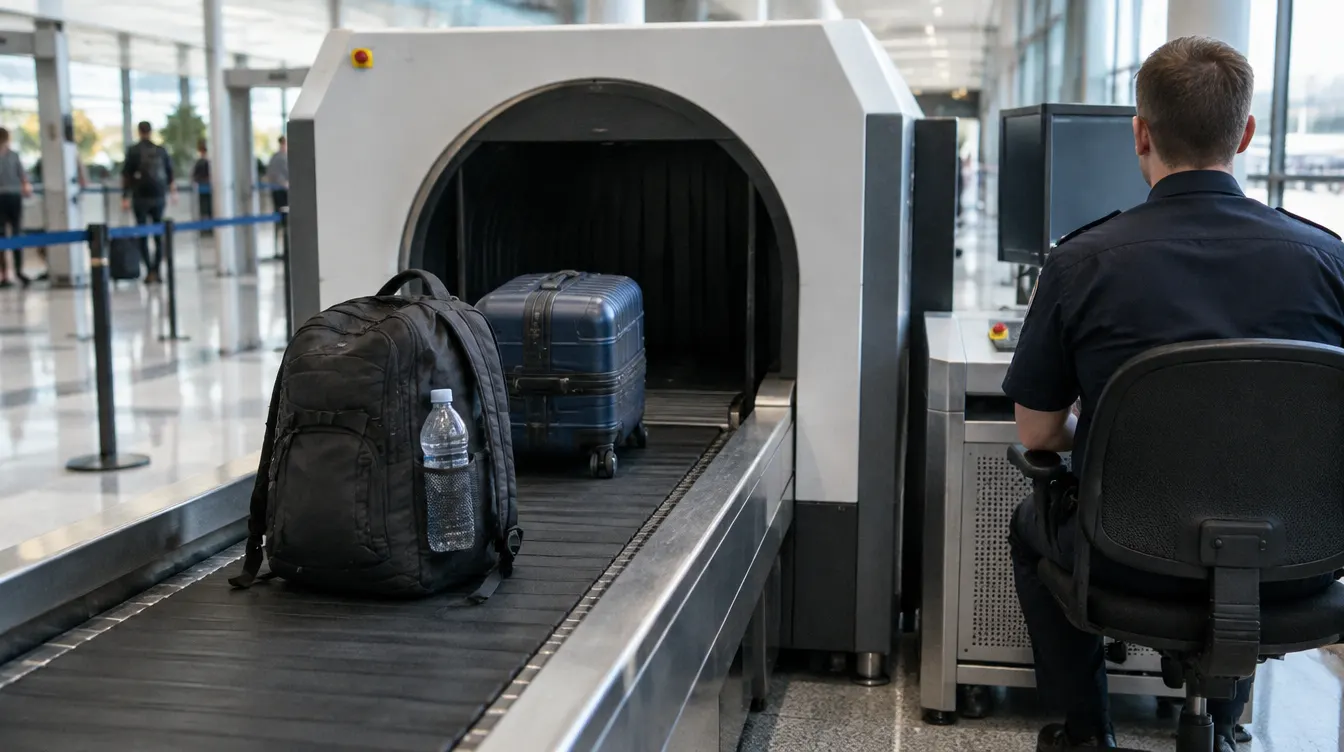
- Some airports allow up to 2 litres per container at checkpoints with new CT scanners: Heathrow in all terminals, Munich, most checkpoints at Frankfurt, Rome Fiumicino. It is decided per airport, sometimes per checkpoint.
- The airport you leave from decides, not the airline. A relaxed rule on the way out says nothing about the return flight or a transfer security check.
- Medicine and baby food are exempt everywhere, in the quantity you need for the trip. Take them out and declare them at the checkpoint.
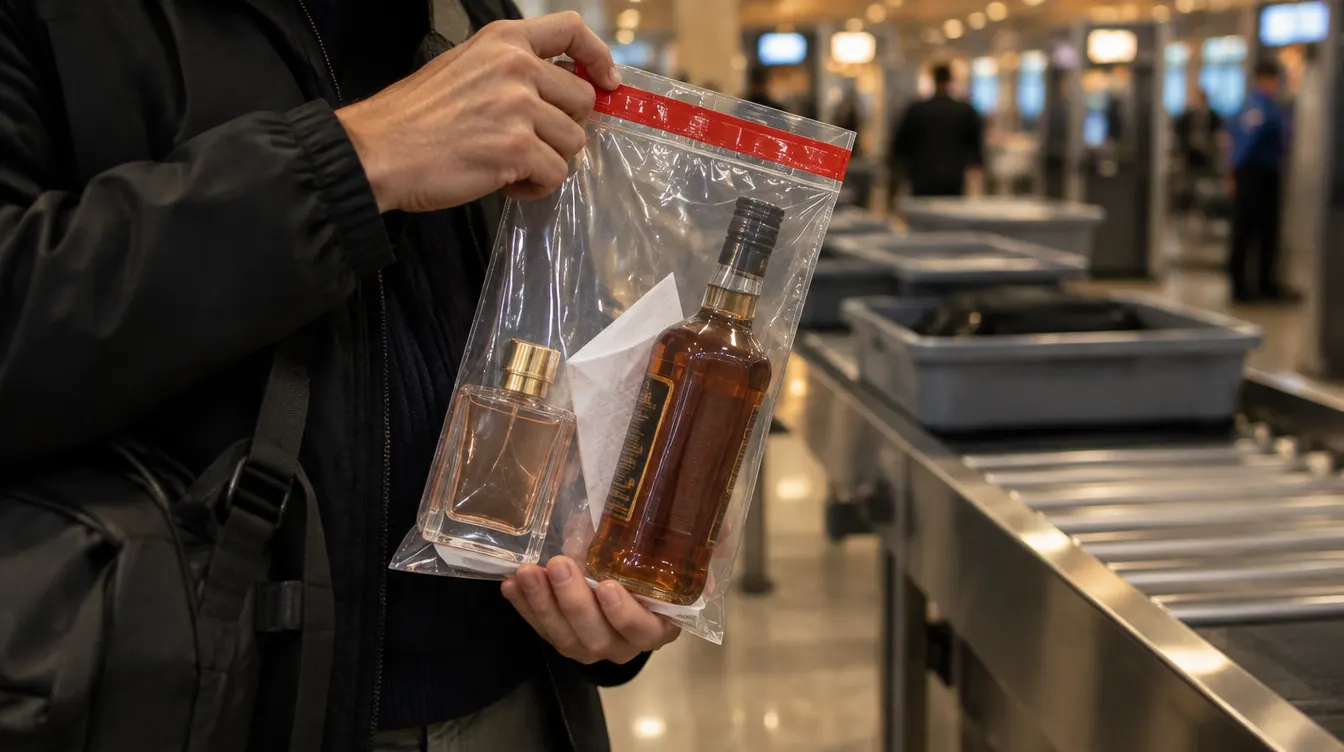
- Duty-free liquids travel in a sealed security bag with the receipt inside. Don't open it until you've landed for the last time.
Why the rule went away, came back and went away again
The 100 ml limit exists because ordinary X-ray machines can't tell water from a liquid explosive. Newer CT scanners build a 3D image of the bag and can. Airports that installed them started relaxing the rule, and that's where it got messy.
In the UK, several smaller airports had already dropped the limit when the Department for Transport put it back on 9 June 2024 at Newcastle, Leeds Bradford, London City, Aberdeen, Southend and Teesside, to allow “further improvements” to the new checkpoints. In the EU, the European Commission did the same from 1 September 2024 at airports using EDSCB scanners, calling it a precaution over a “temporary technical issue”.
In July 2025 the EU lifted that restriction again for scanners made by Smiths Detection, allowing containers of up to 2 litres. The catch, as the airports' association ACI Europe pointed out, is that other makers' equipment was still waiting to be re-tested, so many airports had to keep the 100 ml limit. Since then it has been a patchwork, and it still is.
Where you can take more than 100 ml
This is what the rules said when I checked them in November 2026. Treat it as a starting point and look at your airport's own page a day or two before you fly: this is exactly the kind of rule that changes without much warning.
| Where | Limit per container | Notes |
|---|---|---|
| London Heathrow | 2 litres | Terminals 2, 3, 4 and 5. Liquids stay in your bag. |
| Munich | 2 litres | At the CT checkpoints in Terminals 1 and 2. Liquids and electronics stay in the bag. |
| Frankfurt | 2 litres or 100 ml | 2 litres at most checkpoints in Terminal 1 and all in Terminal 3. 100 ml at gates C1, C2, C4, C6 and at transfer checks. |
| Rome Fiumicino | 2 litres or 100 ml | 2 litres at EDS C3 checkpoints since 26 July 2025. 100 ml at checkpoints for flights to the USA and Israel. |
| Spain (Aena airports) | 100 ml | Aena's own page still states 100 ml in a 1-litre bag. |
| France | 100 ml | The official service-public.gouv.fr page states 100 ml in a 1-litre bag. |
| Most other UK airports | Check | GOV.UK: 100 ml at most airports, up to 2 litres at some. Check with the airport. |
| United States (TSA) | 100 ml (3.4 oz) | The 3-1-1 rule: one quart-size bag per passenger. |
| Russia | 100 ml | One transparent resealable bag of up to 1 litre. |
Two litres is a per-container limit, not a reason to bring a jerrycan. And it's still only about security: your airline's cabin bag size and weight limits apply as before.
The trap: the way back and the connection
The rule belongs to the checkpoint, not to your ticket. Fly out of Heathrow with a big bottle of sunscreen and it will be confiscated on the way home if your return airport still works to 100 ml. I'd pack for the stricter of the two airports.
Connections are where most people lose things. If you change planes and have to go through security again, that checkpoint's rule applies. Frankfurt is a good example: its main checkpoints take 2 litres, but its transfer checks are still on 100 ml. Same airport, same day, different rule.
Duty-free: the sealed bag
Liquids you buy after security are fine on the flight they were bought for. The problem starts when you change planes. Under EU rules, duty-free liquids bought at an EU airport or on board an EU airline pass a later security check if they're in a security tamper-evident bag (STEB) with proof that you bought them airside that day. GOV.UK says the same for UK airports and adds: don't open the bag until you reach your final destination.
Flying to the US with a connection there? The TSA lets duty-free liquids over 3.4 oz through if they were bought abroad within the last 48 hours, packed by the shop in a transparent tamper-evident bag, with the original receipt. They still go through screening, and if the bag is opened or the receipt missing, they won't.
Medicine, special diets and baby food
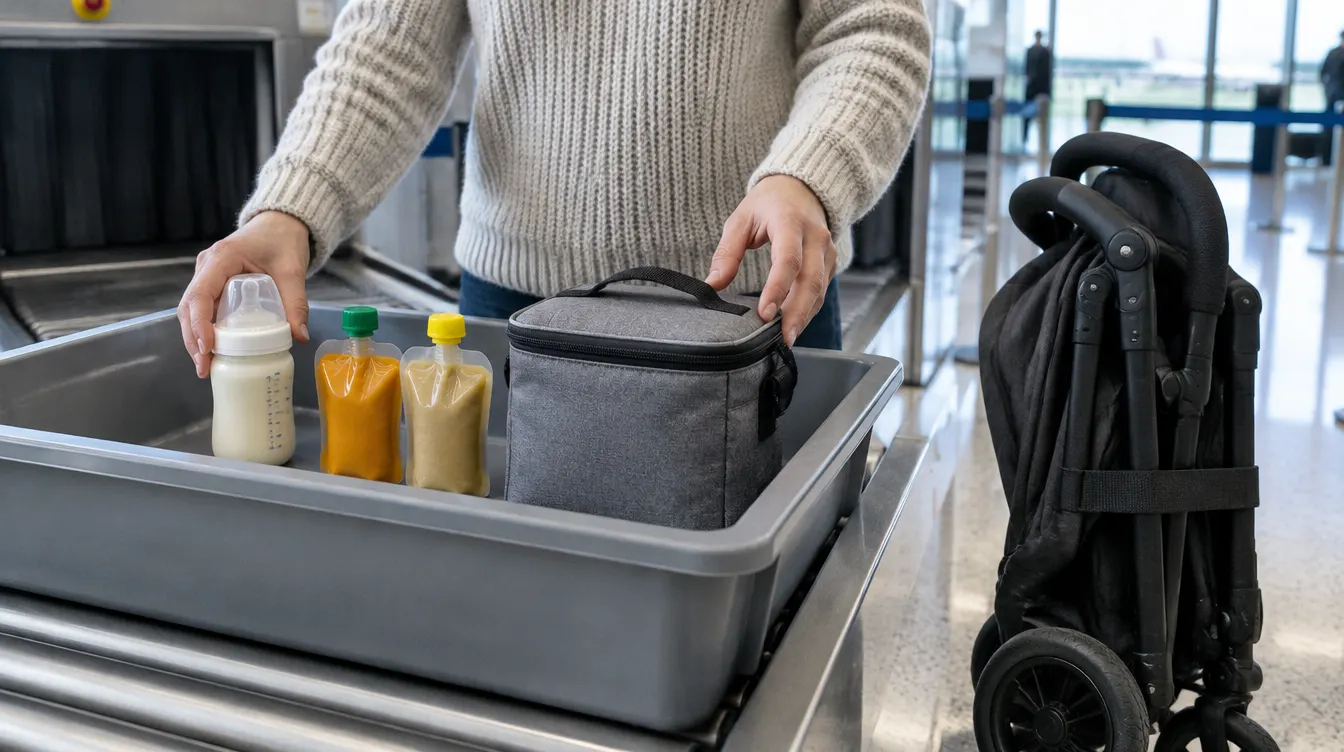
These are exempt almost everywhere, as long as you need them for the trip. The European Commission's wording is liquids “to be used during the trip for medical purposes or special dietary requirements, including baby food”. They can travel outside the plastic bag but must be shown at the checkpoint.
- UK: GOV.UK exempts liquids for essential medical purposes, special diets, baby food and baby milk. Heathrow asks for a prescription or a doctor's letter if you need more than 2 litres of a medicine.
- US: the TSA allows medication and formula, breast milk, toddler drinks and baby food over 3.4 oz. Tell the officer at the start and take them out for separate screening. Your baby doesn't have to be travelling with you to bring breast milk.
- EU: the same exemption applies; bring a prescription or something that explains your condition if a medicine is unusual or the quantity is large. Spain's Aena asks for exactly that.
How I'd pack
- Check both airports, plus the transfer one if you go through security again. Use the airport's own website, not a forum thread from last year.
- Pack for the stricter one. If any checkpoint on the trip is 100 ml, keep everything in 100 ml containers in a 1-litre bag.
- Keep the bag on top. Even where liquids may stay inside, an officer can ask you to take them out.
- Bring an empty bottle and fill it after security. An empty bottle isn't a liquid.
- Medicines and baby food separately, with the prescription where it applies.
Where Bordy helps
Bordy won't tell you the liquid rule at a checkpoint; for that, use the airport's own page. What it does tell you is the part that decides which checkpoint you end up at. At Frankfurt, a C gate means the old 100 ml rule, while most of Terminal 1 means two litres.
Add your flight to Bordy and the flight screen shows the terminal and gate as soon as they're published, with a push notification if the gate changes. On a connection, add both flights: if the first one is delayed, you'll know right away how much time is left for transfer security and for repacking that bag. Live status and these alerts are in the free plan.
Questions people actually ask
Is the 100 ml liquid rule still in force in 2026?
Can I take a 2-litre bottle through security at Heathrow?
Can I take duty-free liquids on a connecting flight?
Do baby milk and medicines count toward the 100 ml limit?
Where these numbers come from
- European Commission: Liquids, aerosols and gels — checked 9 November 2026
- European Commission: temporary restrictions on liquid screening at certain EU airports (31 July 2024) — checked 9 November 2026
- ACI EUROPE: lifting of the LAGs restriction (25 July 2025) — checked 9 November 2026
- GOV.UK: Hand luggage restrictions at UK airports, liquids — checked 9 November 2026
- Department for Transport statement on airport liquid restrictions (7 June 2024) — checked 9 November 2026
- Heathrow: Hand baggage and liquids — checked 9 November 2026
- Munich Airport: Security and passport control — checked 9 November 2026
- Frankfurt Airport: Security check — checked 9 November 2026
- Aeroporti di Roma: liquids at Fiumicino under the new EU rules (July 2025) — checked 9 November 2026
- TSA: Liquids, aerosols and gels rule — checked 9 November 2026
- TSA: Traveling with children — checked 9 November 2026