In the air · Updated November 2026
Turbulence explained:
bumpy, not dangerous
The seatbelt sign pings, the coffee shivers, and your stomach drops half a beat after the plane does. Turbulence is the thing nervous flyers fear most, and one of the least dangerous things that happens to an airliner. Here is what it actually is, why the aircraft doesn't mind, where you feel it least, and the one habit that takes almost all the risk out of it.
In brief
- Turbulence is moving air, not holes in it. The plane is held up by air the whole time; it just rides over uneven currents, like a boat on a choppy lake.
- It doesn't break airliners. In 111 turbulence accidents on US airlines in 2009–2018, the NTSB found not one where the aircraft was substantially damaged.
- The risk is to people who aren't strapped in. Of the 26 passengers seriously hurt in those accidents, only one was documented as wearing a seat belt.
- You feel it least over the wing, near the aircraft's centre of gravity. The back of the cabin moves the most.
- Pilots plan around it with forecasts, weather radar and reports from aircraft ahead. But clear-air turbulence is invisible, so keep the belt on whenever you're seated.
What turbulence actually is
Air is a fluid, and it rarely moves in tidy layers. Warm air rises inside clouds, wind spills over mountain ranges, and fast and slow streams of air rub against each other at cruising height. Fly through those uneven currents and the plane gets nudged up, down and sideways. That's turbulence.
Germany's weather service, the DWD, is blunt about the famous “air pocket”: there is no hole in the air, only turbulence. The sink you feel is real but brief. People are very sensitive to changes in how heavy they feel, especially a sudden drop, which is why a few metres can feel like a cliff.
The NTSB, the US accident investigator, sorted turbulence accidents on US airlines in 2009–2018 by cause. Convective turbulence around storm clouds was present in 58% of them, clear-air turbulence in 29%, and the rest came mainly from mountain waves, wake turbulence and other sources.
| Type | Where it comes from | Can pilots see it? |
|---|---|---|
| Convective | Rising and sinking air in and around cumulus and thunderstorm clouds | Yes: on weather radar and out of the window |
| Clear-air | Wind shear near the jet stream, mostly above about 6 km | No: invisible to eye and radar, so forecasts and reports from other aircraft |
| Mountain wave | Air flowing over mountain ranges and rising and falling in their lee | Not directly: weather services forecast it from models |
Why it doesn't hurt the plane
Airliners are built for far more than a rough ride. US airworthiness rules require a passenger jet's structure to take a load factor of at least +2.5 g and −1 g without damage (14 CFR 25.337), and then add a safety factor of 1.5 on top of that (25.303). EASA, the EU's aviation safety agency, puts it simply: most of the time turbulence is harmless, because planes are built to withstand extreme conditions.
The accident record agrees. Of those 111 turbulence accidents on US airlines between 2009 and 2018, the NTSB found that none qualified as an accident because of damage to the aircraft. Five planes had minor damage, and it was in the cabin: seats, ceiling panels, overhead bins. Every one of the 111 was an accident because someone on board was seriously hurt.
That's the uncomfortable half of the story, and the useful one. Turbulence is a risk to people moving around inside the plane, not to the plane.
The seatbelt sign, and why it matters
Of the 123 people seriously injured in those accidents, 97 were flight attendants, who spend the flight on their feet. Of the 26 passengers, 17 were not wearing a seat belt, one was, and for eight nobody recorded it. Seven of the 26 were using, waiting for or walking to or from the toilet. The NTSB's conclusion fits in one line: nearly all turbulence injuries happen to people who aren't wearing their seat belts.
The clearest recent example is Singapore Airlines flight SQ321 on 21 May 2024, at 37,000 ft over southern Myanmar. According to Singapore's Transport Safety Investigation Bureau, vertical acceleration went from +1.35 g to −1.5 g in 0.6 seconds, and the plane lost 178 ft (54 m) of height over 4.6 seconds. People who were not belted in were likely lifted out of their seats and then fell back. The seatbelt sign had been switched on about eight seconds earlier. The flight diverted to Bangkok.
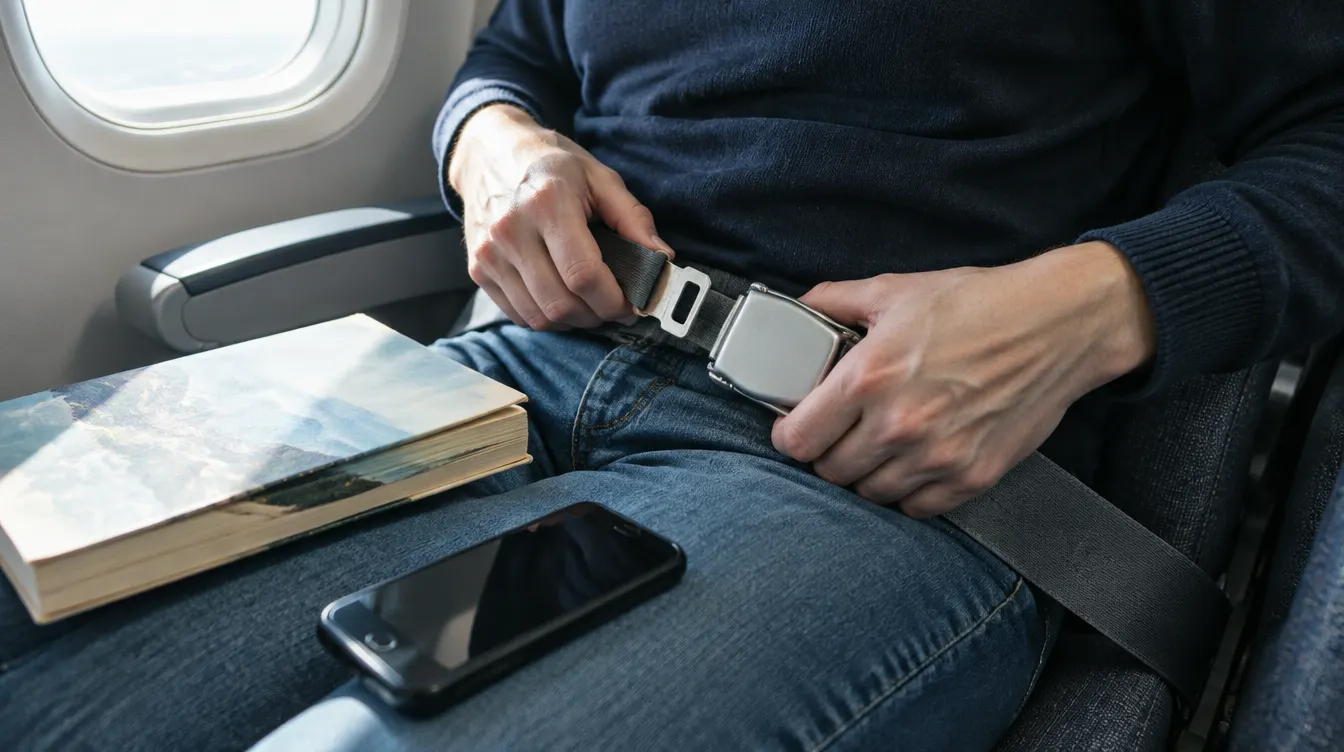
Eight seconds is not enough to get back from the toilet queue. That's why the rules lean on the sign. In the US, passengers must fasten the belt and keep it fastened while the sign is lit (14 CFR 121.317). EU rules make the captain responsible for passengers being strapped in for taxi, take-off, landing and whenever safety requires it, and EASA recommends keeping the belt on the whole time you're seated.
And no, the sign isn't there to keep you out of the aisle during the meal service. Pilots interviewed by the NTSB said switching it on for reasons unrelated to safety was an old habit and is now rare. Some pilots switch it on sooner than others, but when it's on, it means something.
Where you feel it least
A plane pitches around its centre of gravity, which sits close to the wing. The further you sit from that point, the bigger the swing. NASA flight tests on a Boeing 757, cited by the NTSB, measured loads at the aft galley 40% higher than at the centre of gravity, and 12% higher at the pilots' seats. The NTSB notes those results were never published, but the pilots it interviewed said the same: turbulence is felt most at the back.
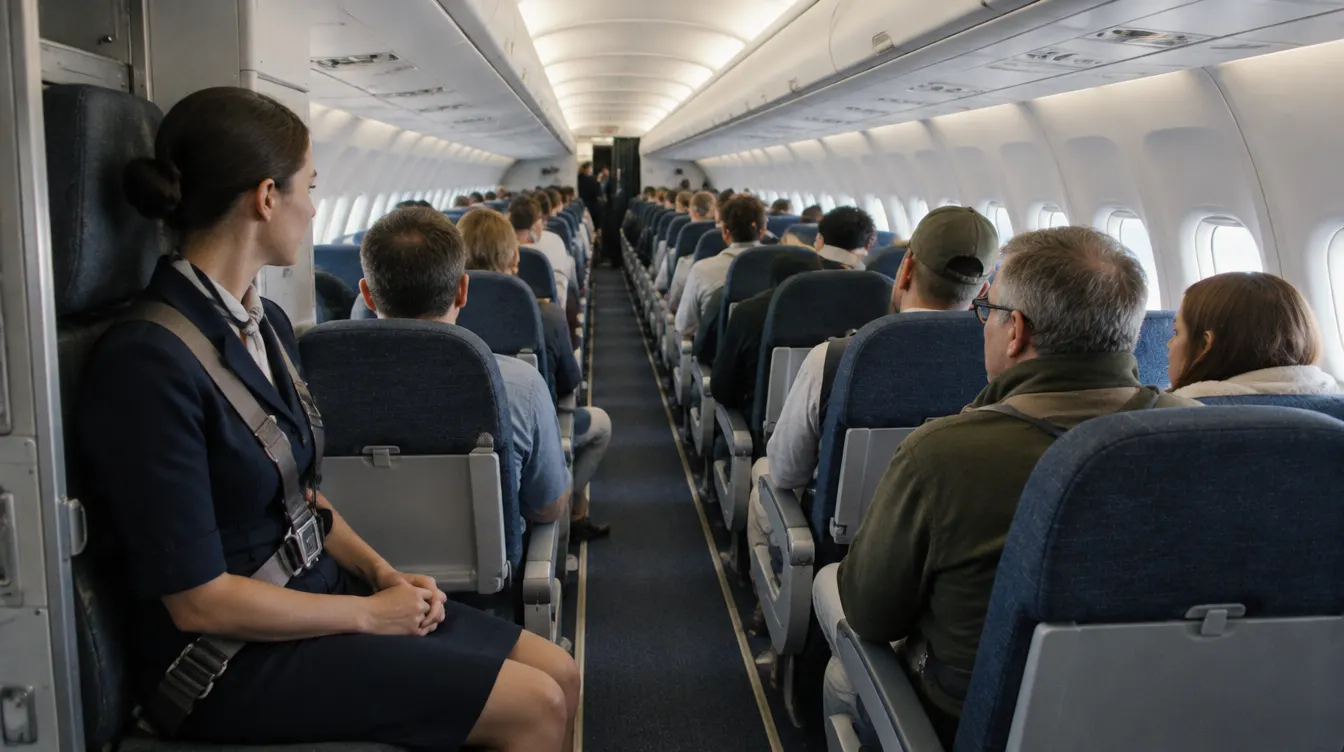
So for a smoother ride, choose a seat over the wing, around the overwing exits on an A320 or a 737. It changes how bumpy it feels, not how safe you are: the belt does that. More on picking a seat in the guide to the best seat on a plane.
How pilots avoid it
Avoiding turbulence starts before the flight. Two World Area Forecast Centres, run by the UK Met Office and by NOAA in the US, publish global forecasts of jet streams, storm clouds, turbulence and icing that go straight into flight planning software. National weather services add warnings on top: in the US, SIGMETs for severe turbulence and AIRMETs for moderate.
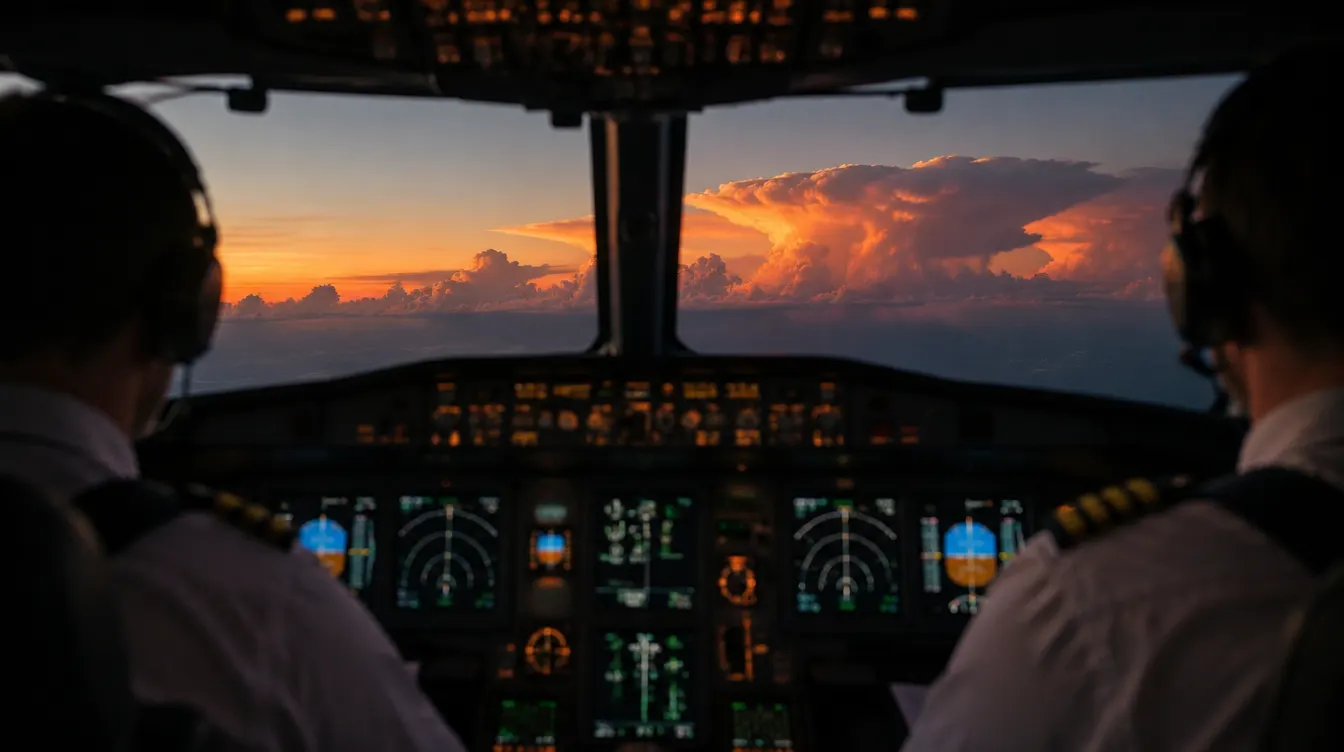
In the air, weather radar shows storm cells ahead and crews fly around them. Clear-air turbulence shows on neither radar nor the windscreen, so for that pilots lean on forecasts and on each other. The pilots the NTSB interviewed said they often ask for and pass on ride reports when they check in with a new air traffic control sector, and controllers described handling turbulence mostly through pilot reports and pilots' requests to deviate.
The system isn't perfect, and the NTSB says so: reports from other aircraft describe one point at one moment, and forecasts can't pin down every rough patch. That gap is exactly why the advice for passengers never changes.
What to do when it gets bumpy
- Belt on, low and snug, the moment the sign comes on. Better still, it's already on.
- Stay seated, even if you were about to go to the toilet. The aisle and the queue at the back are the worst places to be.
- Secure what can fly: hot drinks in hand or finished, laptop under the seat in front, bags in the bins closed.
- Expect it on descent. More of the NTSB's accidents happened in descent (36%) than in cruise (31%). Toilet trips early in the cruise, not in the last half hour.
- Listen to the crew. If the captain asks the cabin crew to sit down, the bumps were forecast. That's planning, not an emergency.
My own routine is boring on purpose: belt on, loosely, from the moment I sit down until the door opens. It costs nothing and covers the eight seconds nobody warns you about.
Where Bordy fits
Bordy has no turbulence map and won't predict a bumpy ride. I'd rather say that plainly than pretend. What it does is everything around the flight: add it by number and Bordy re-checks the status every two minutes from FlightAware's data, with pushes for gate changes, delays (with the old and new time), boarding, departure and landing.
For nervous flyers, the most useful part is often for someone else. Bordy tracks any flight by number, including flights you're not on, for free. Send your flight number to whoever worries about you: they see altitude and ground speed and get a push the moment you land, instead of refreshing a website. Pro adds the aircraft's registration, operator and photo, and where the aircraft for your flight is right now.
Questions people actually ask
Can turbulence bring down a plane?
Where is the best seat to avoid turbulence?
Why keep the seat belt on when the sign is off?
Is turbulence getting worse?
Can pilots see turbulence?
Where these numbers come from
- NTSB: Preventing Turbulence-Related Injuries in Air Carrier Operations (Safety Research Report SS-21-01, PDF) — checked 7 November 2026
- EASA: The how's and why's of flying — checked 7 November 2026
- 14 CFR § 25.337, Limit maneuvering load factors (Cornell LII) — checked 7 November 2026
- 14 CFR § 25.303, Factor of safety (Cornell LII) — checked 7 November 2026
- 14 CFR § 121.317, Passenger information requirements (Cornell LII) — checked 7 November 2026
- Singapore Ministry of Transport: TSIB preliminary findings on SQ321 — checked 7 November 2026
- CAT.OP.MPA.225 Seats, safety belts and restraint systems, Regulation (EU) 965/2012 (UK CAA regulatory library) — checked 7 November 2026
- Met Office: World Area Forecast Centre — checked 7 November 2026
- DWD: Löcher in der Luft? (in German) — checked 7 November 2026
- AGU: Hazardous clear-air turbulence up 55% from 1979, study shows — checked 7 November 2026