Delays · Updated November 2026
Why flights are delayed,
and which reasons cost the airline
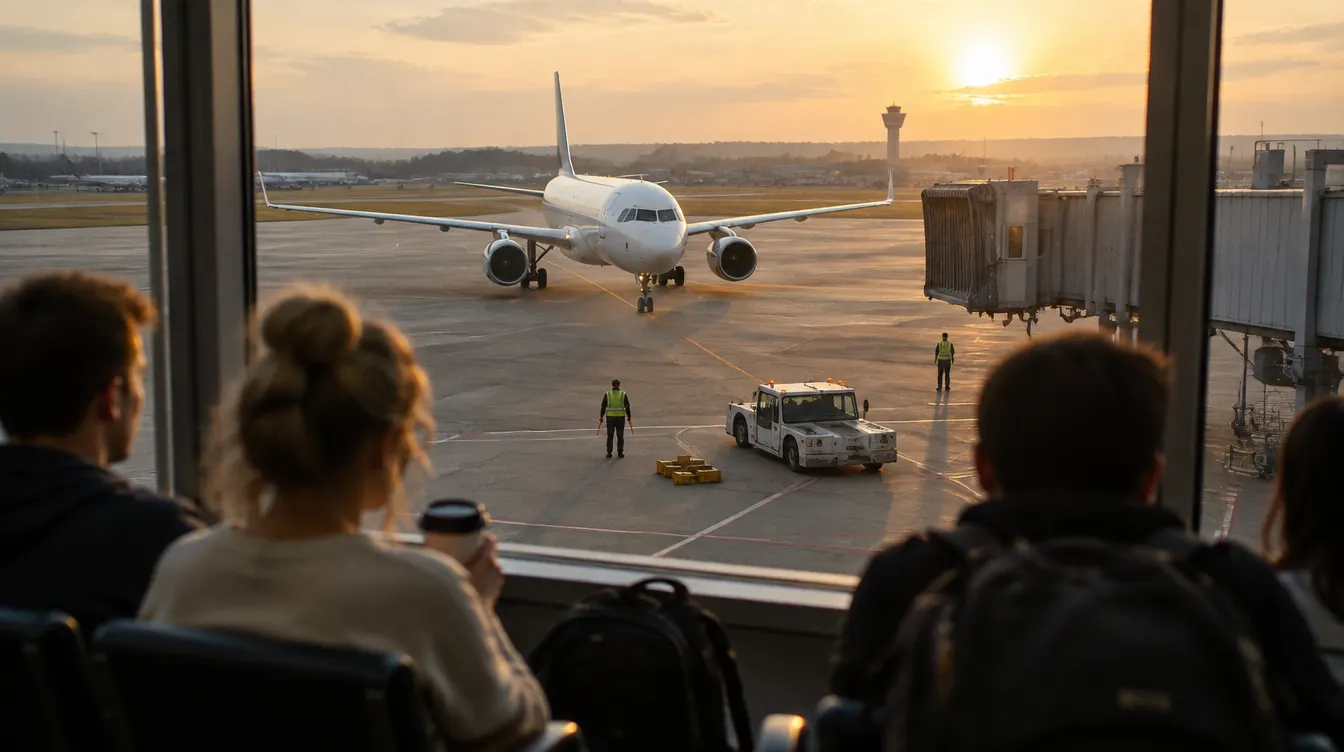
“Operational reasons” is what you hear at the gate. Behind that phrase there are only a handful of real causes, and the official statistics on both sides of the Atlantic agree on the biggest one: the aircraft you are about to board is still somewhere else. Here is what actually delays flights, in numbers, and which causes still leave you entitled to money.
In brief
- The No. 1 cause is a late inbound aircraft. In the US in 2025 it was behind more than a third of late arrivals. In Europe, knock-on (reactionary) delay made up 46% of all departure delay minutes in 2024.
- Next come the airline's own problems (maintenance, crew, boarding, baggage, cleaning) and air traffic restrictions, which are often weather in disguise.
- “Extreme weather” on its own is small: 0.9% of US flights in 2025. But weather also hides inside the air traffic and late-aircraft numbers.
- The cause decides compensation, not care. Under EU261, unsafe weather, air traffic management decisions and security risks usually excuse the airline from paying €250–600. Most technical faults and strikes by its own staff do not. Meals and a hotel are owed either way.
- A late inbound plane is judged by what made it late. EU courts look at the original cause, and at whether the airline's own decision is what really delayed your flight.
What the numbers say: the United States
The most detailed public breakdown comes from the US Bureau of Transportation Statistics (BTS). Large US airlines report every flight, and for each arrival 15 minutes or more late they assign the delay to one of five broad causes. When two causes share a flight, it is split between them by minutes.
| Cause | Share of all flights, 2025 | What it covers |
|---|---|---|
| Late-arriving aircraft | 7.96% | The previous flight with the same aircraft arrived late |
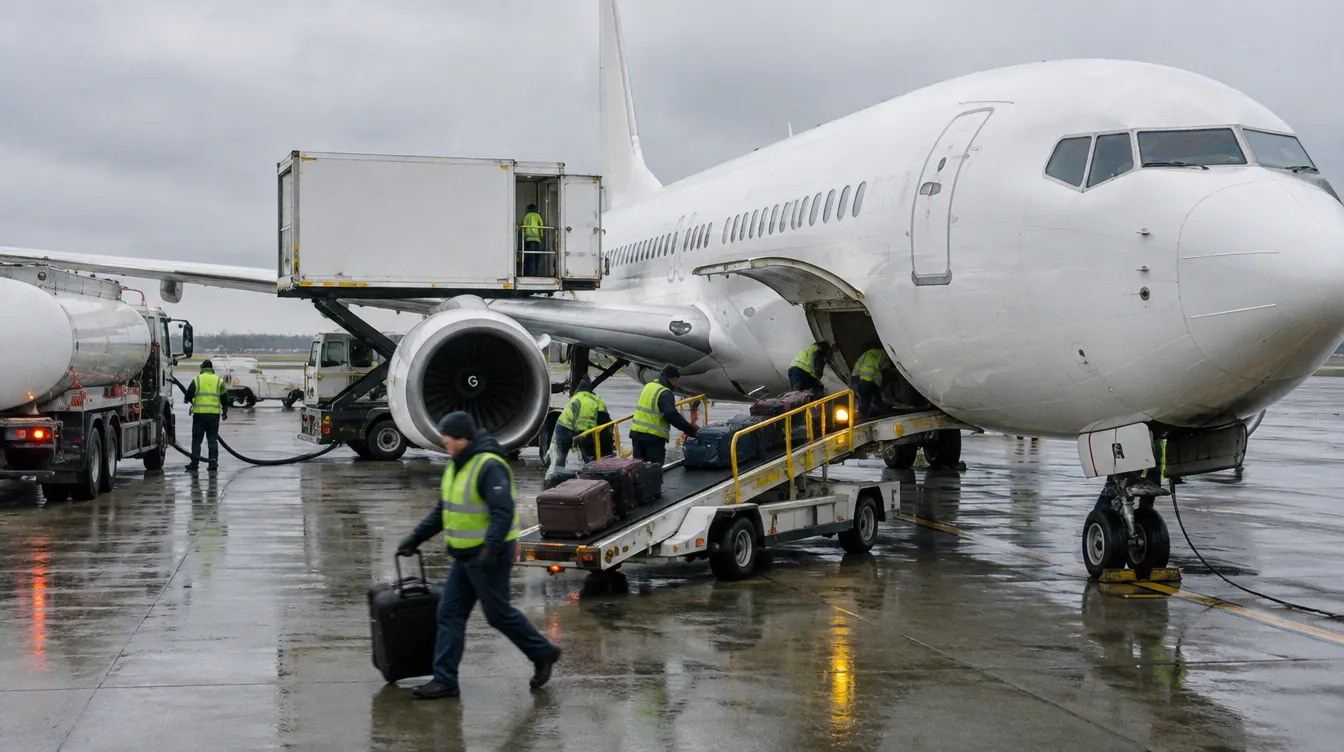
| Air carrier | 6.59% | Things within the airline's control: maintenance, crew, cleaning, baggage loading, fuelling |
| National Aviation System | 6.32% | Air traffic control limits, traffic volume, closed runways, non-extreme weather |
| Extreme weather | 0.88% | Weather serious enough to hold or stop the flight by itself |
| Security | 0.04% | Security problems at the airport |
Add it up and 21.8% of US flights arrived at least 15 minutes late in 2025, while 76.4% were on time and 1.5% were cancelled. The late inbound aircraft is the largest single line, a bit more than a third of all late arrivals. Summer is worse: in August 2026 on-time arrivals dropped to 71.5%, and late-arriving aircraft alone delayed 10.2% of all flights.
Weather is bigger than its 0.9% row suggests. BTS itself counts weather three ways: the extreme-weather row, the weather part of air traffic system delays, and weather's share of late-arriving aircraft. In 2025, 47% of the air traffic system delay minutes were caused by weather, 36% by traffic volume and 8% by closed runways (FAA data published by BTS). In plain words: “air traffic control delay” in the US is roughly half weather.
What the numbers say: Europe
In Europe, Eurocontrol's Central Office for Delay Analysis (CODA) collects the delay codes airlines report. In 2024, the latest full-year report, the average departure delay was 17.5 minutes per flight, and 8.0 of those minutes, 46%, were knock-on delay from earlier flights.
| Cause | 2024, full year | August 2026* |
|---|---|---|
| Reactionary: late inbound aircraft, crew or passengers | 8.0 | 9.3 |
| Airline: handling, boarding, technical, crew, staff shortages | 4.3 | 4.1 |
| En-route air traffic flow restrictions | 2.3 | 3.4 |
| Airport restrictions | 1.7 | 1.0 |
| All causes | 17.5 | 19.3 |
*The August 2026 figures are from Eurocontrol's monthly report, based on preliminary data covering about 55% of flights. The remaining minutes in both columns are other weather, government and miscellaneous causes. Summer is always the worst: July 2024, at 27.7 minutes per flight, was the most delayed month in five years.
The European story is air traffic capacity in summer. In 2024 nearly half of all en-route flow delays came from three control centres: Budapest, Karlsruhe and Zagreb. On the ground, weather was the main driver of airport delays. London Heathrow faced arrival restrictions most often, followed by Porto, Lisbon and London Gatwick.
Why one late plane spoils the whole day
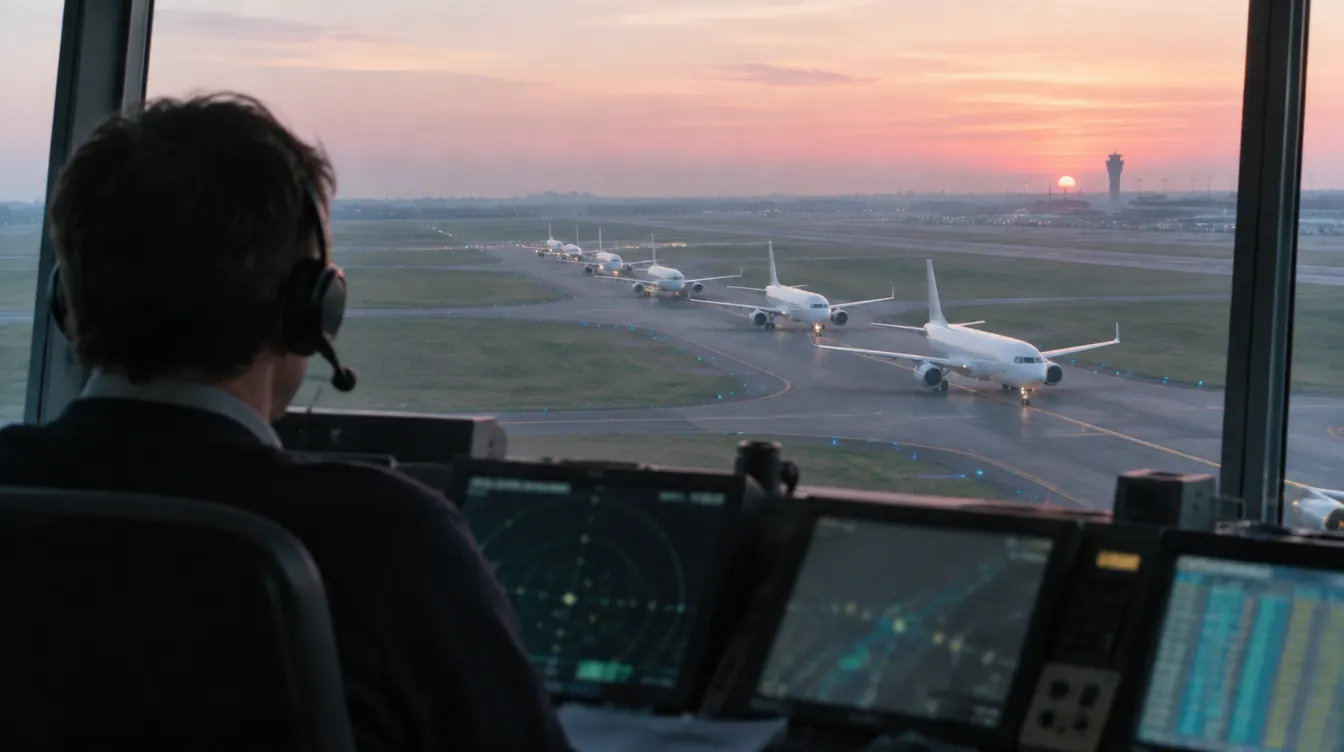
A short-haul aircraft flies several legs a day, with only a short turnaround between them. If the first leg leaves 40 minutes late, there is little slack to win that back, so the delay rolls into the next flight, and the next. Crews rotate the same way, and their working hours are capped, so a late crew cannot always just stay longer.
Airlines pad their schedules to absorb some of this, which is why your flight can leave 30 minutes late and still land roughly on time. But padding has limits. When it matters, I book the first departure of the morning: by the evening a flight has had all day to inherit someone else's problems.
Which causes change your compensation
Under EU Regulation 261/2004 you are owed €250, €400 or €600, depending on distance, if you reach your final destination 3 hours or more late. The exception is extraordinary circumstances, and the airline has to prove them with evidence such as logbook extracts or incident reports. Meals, refreshments and a hotel are owed whatever the cause. Full details are in our EU261 delay guide.
| Cause | Compensation? | Why |
|---|---|---|
| Storm, snow or fog that makes flying unsafe | Usually no | Adverse weather is a listed extraordinary circumstance |
| Air traffic control restriction | Usually no | Air traffic management decisions are extraordinary |
| Strike outside the airline, e.g. air traffic controllers | Often no | Only if the airline proves the link and that it could not avoid the disruption |
| Security risk | Usually no | Listed as extraordinary |
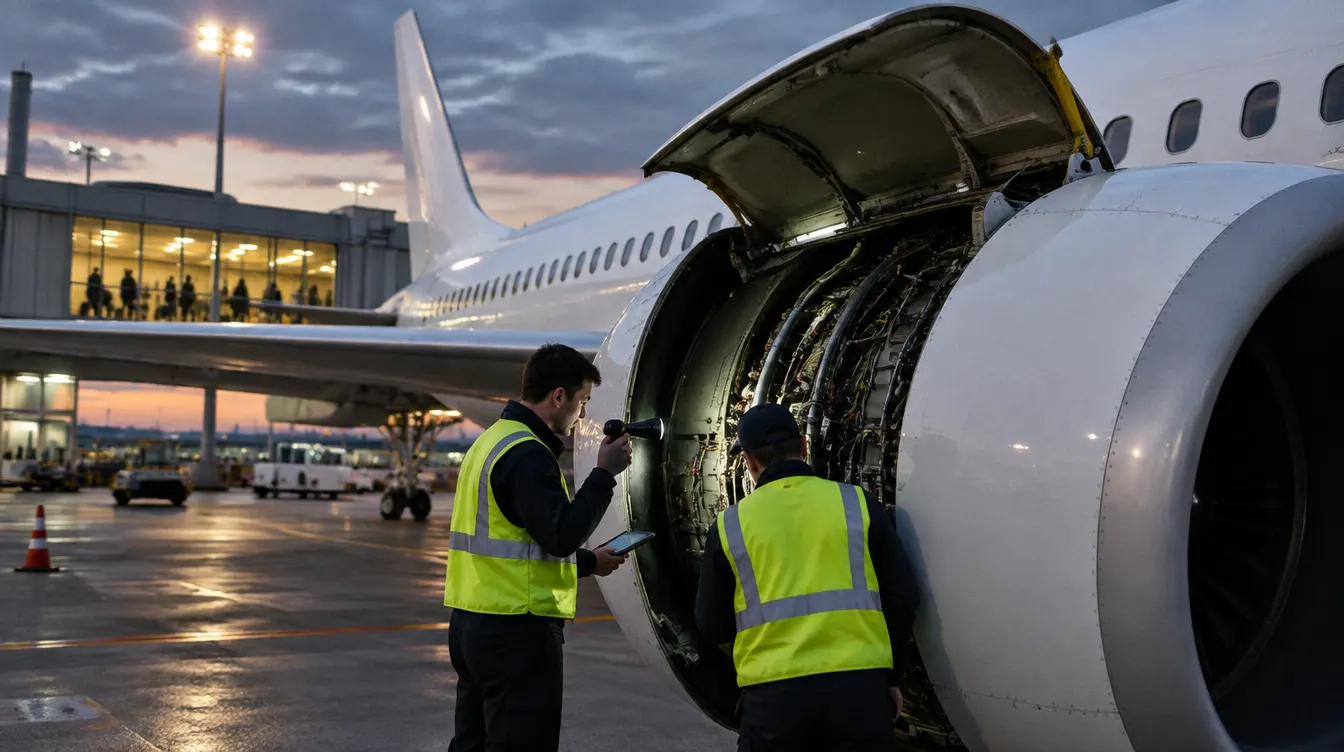
| Technical fault found in maintenance or caused by poor maintenance | Usually yes | Not extraordinary under EU rules |
| Strike by the airline's own staff | Usually yes | Internal strikes are not extraordinary |
| Late inbound aircraft | Depends | Judged by what delayed the earlier flight |
The late inbound plane is where most arguments happen. In case C-74/19 (11 June 2020) the EU Court of Justice allowed an airline to rely on an extraordinary circumstance that hit an earlier flight operated with the same aircraft. In March 2026 the EU General Court added a limit in case T-656/24: if the airline's own autonomous decision, such as waiting for late passengers of the earlier flight, is the determining cause of your delay, the airline cannot hide behind the original event.
Crew shortages and late crews are not among the EU's examples of extraordinary circumstances, so the burden stays on the airline. Russia works differently: under Article 120 of the Air Code the fine is 100 roubles per hour, capped at half the fare, and the airline is exempt for force majeure, for fixing a fault that threatens passengers' safety, or for other circumstances beyond its control. A safety-critical fault therefore excuses the fine in Russia but usually not EU261 compensation. See our Russian delay guide (in Russian).
What I'd do when the board says “delayed”
- Check where your aircraft is. If it has not left its previous airport, no amount of “boarding soon” on the board will make your flight leave on time.
- Get the reason, in writing if you can. Screenshot the board, the airline's app and every message. The reason given at the gate is a summary; for a claim, what counts is the actual cause.
- Take the care regardless. Meals and a hotel do not depend on the cause, in the EU or in Russia.
- Don't accept “weather” as the final word. If a claim is refused, ask what exactly happened and to which flight. With a knock-on delay, the question is what delayed the earlier flight.
- Measure at the final destination. For EU261 what counts is your arrival delay, not your departure delay.
See the most common cause yourself
Since the biggest cause of delays is a plane still somewhere else, the useful question is not “will it be late?” but “where is it now?”. Knowing early means leaving home later, or rebooking before the queue at the desk grows.
That is what Bordy is built for. Add your flight by number and it re-checks the status every two minutes from FlightAware's data, then sends a push the moment departure moves, with the old and new time, plus cancellations and gate changes. Delay alerts are free, with no limit on flights. Pro adds where the aircraft for your flight is right now. If it is still on the ground two hours away, you know before the board does. Bordy does not predict delays and does not know the airline's official reason, so keep your own screenshots for a claim.
Questions people actually ask
What is the most common cause of flight delays?
Do I get compensation if my flight was late because the incoming plane was late?
Is an air traffic control delay an extraordinary circumstance?
Is a technical problem an extraordinary circumstance?
Why is my flight delayed when the weather is fine?
Where these numbers come from
- BTS: Airline On-Time Statistics and Delay Causes (January–December 2025 and August 2026) — checked 2 November 2026
- BTS: Understanding the Reporting of Causes of Flight Delays and Cancellations — checked 2 November 2026
- Eurocontrol: CODA Digest, all-causes delays to air transport in Europe, Annual 2024 (PDF) — checked 2 November 2026
- Eurocontrol: All-causes delay to air transport in Europe, August 2026 (PDF) — checked 2 November 2026
- Your Europe: air passenger rights — checked 2 November 2026
- General Court of the EU: press release on case T-656/24, 4 March 2026 (PDF) — checked 2 November 2026
- European Network of Ombudsmen: judgment in case C-74/19, Transportes Aéreos Portugueses — checked 2 November 2026
- Russian Air Code, Article 120 (ConsultantPlus, as amended 25 May 2026) — checked 2 November 2026