Travel health · Updated November 2026
Ears popping on a plane:
why it hurts and what helps
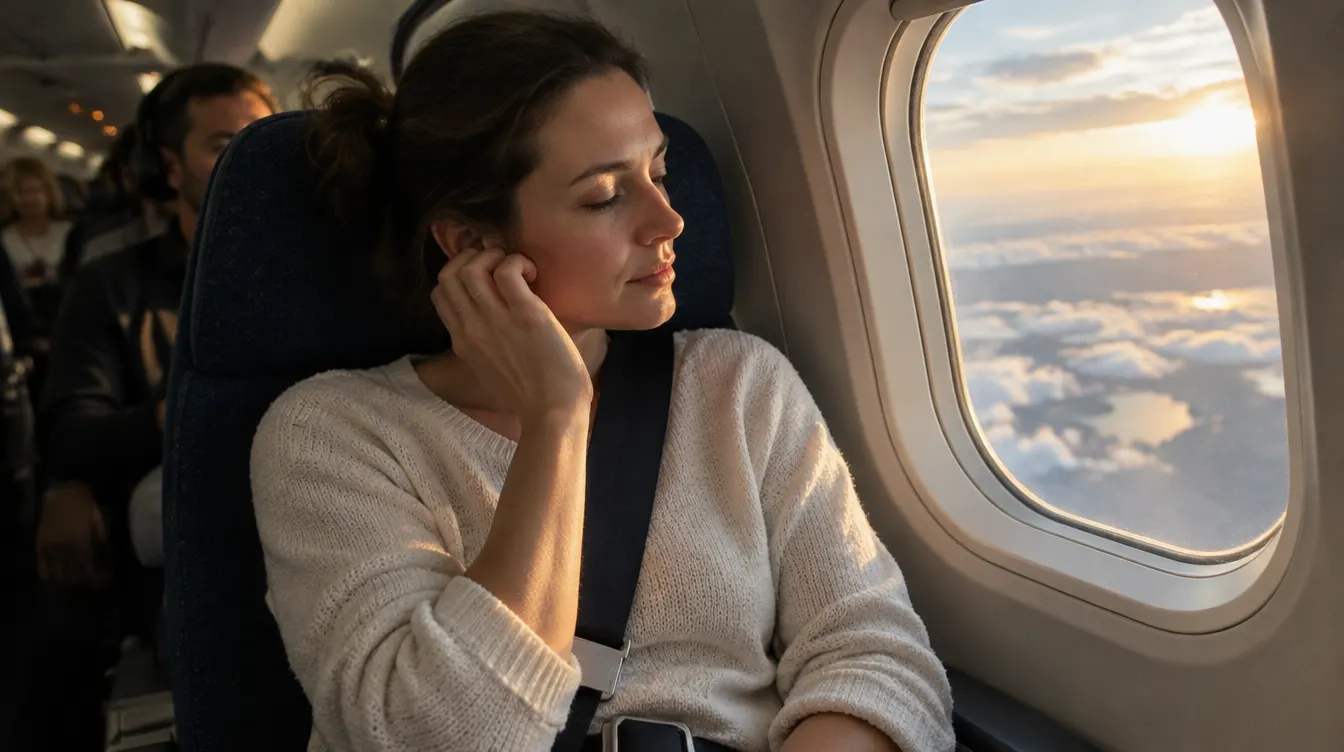
The seatbelt sign pings, the engines go quiet, and twenty minutes later one ear feels like it's full of cotton wool. Sometimes it hurts. It's usually harmless, but there is a right and a wrong way to deal with it. Here is why descent is worse than take-off, how to clear your ears without overdoing it, what to do if you have a cold, and how to help a baby who is screaming through the landing.
In brief
- It's a pressure problem. The cabin is kept at the equivalent of 1,830–2,440 m (6,000–8,000 ft), says the CDC. Your middle ear has to catch up every time that changes.
- Descent is the hard part. On the way up, air leaves the middle ear on its own. On the way down it has to be let in, and that needs the Eustachian tube to open.
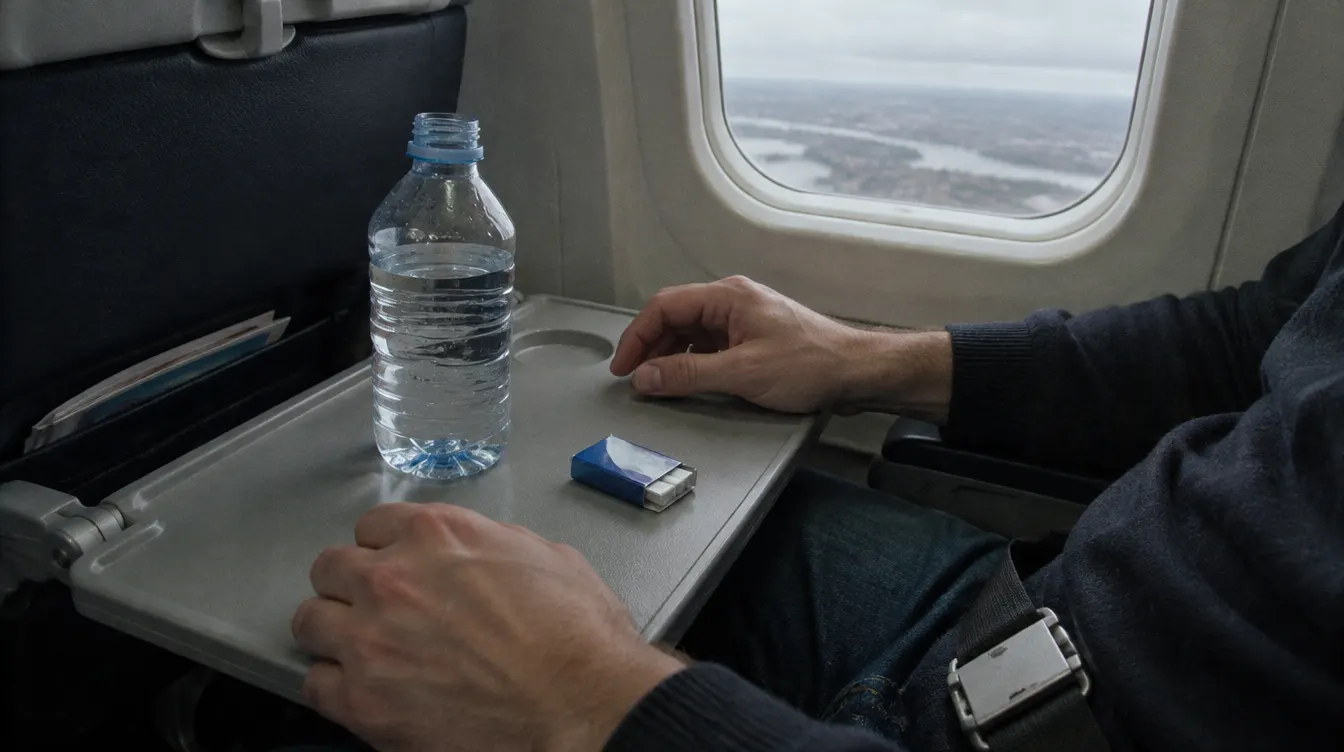
- Swallow, yawn, chew. Gum or hard sweets just before take-off and during descent, and stay awake for the landing.
- Valsalva, gently. Pinch your nose, close your mouth, blow softly as if blowing your nose, then swallow. Never force it.
- With a cold, think twice. The CDC says people with ear, nose or sinus infections or severe congestion may want to postpone flying, or use decongestants.
- Babies: breast, bottle or dummy during take-off and landing, sitting upright.
Why your ears block, and why landing is worse
Behind the eardrum is a small air-filled space, the middle ear. A narrow channel, the Eustachian tube, connects it to the back of your nose. Each time you swallow, the tube opens for a moment and the pressure on both sides of the eardrum evens out.
An airliner isn't pressurised to sea level. US rules cap cabin altitude at 2,440 m (8,000 ft), and in practice it sits at 1,830–2,440 m, according to the CDC Yellow Book. So the pressure drops on the climb and rises again on the way down.
The MSD Manual explains why the two halves feel so different. When outside pressure falls, the extra air in the middle ear pushes its way out through the tube with little effort. When outside pressure rises on descent, the tube tends to stay shut, the air inside is now at lower pressure, and the eardrum gets pulled inward. That stretch is what you feel as fullness, muffled hearing and, sometimes, sharp pain.
What to do, stage by stage
| When | What to do |
|---|---|
| Before boarding | If you're congested and your doctor or pharmacist says it's fine for you, a decongestant nasal spray 30–60 minutes before take-off |
| Take-off | Swallow, yawn, chew gum or suck a hard sweet |
| Cruise | Nothing special. If you use a spray, MSD's timing is 30–60 minutes before descent too; check the leaflet for how often you may take it |
| Descent | Stay awake. Swallow and chew constantly, and use a gentle Valsalva if your ears feel blocked |
| After landing | Keep swallowing and yawning. If it still hurts after a few hours, see a doctor |
Swallowing is the main tool. The American Academy of Otolaryngology's patient site recommends swallowing, yawning, chewing gum or sucking hard sweets, especially just before take-off and during descent. Sweets and gum work because they make you swallow more often. A drink of water does the same.
Don't sleep through the landing. MedlinePlus, the US National Library of Medicine's health site, says plainly: don't sleep while the plane is coming in to land. Asleep, you swallow far less, and the pressure difference builds up unnoticed. I set an alarm on long flights for this reason, or simply ask the person next to me to nudge me when the seatbelt sign comes on.
The Valsalva manoeuvre without hurting yourself
If swallowing doesn't do it, you can push a little air up the tube yourself. The ENT Health description, from the American Academy of Otolaryngology: pinch your nose, take a mouthful of air, blow gently, not forcefully, against your pinched nose, then swallow. A soft click or pop means the ear has opened.
The key word is gently. Think blowing your nose, not inflating a balloon. If one or two soft tries don't work, go back to swallowing and chewing and try again a minute later rather than pushing harder. The MSD Manual suggests repeating it several times during descent.
Flying with a cold or blocked nose
A cold is the most common reason the tube stops working: the swollen lining of the nose carries on into the tube. That's why a flight you normally don't notice can be miserable with a blocked nose.
- Postponing is a real option. The CDC says travellers with ear, nose or sinus infections or severe congestion may choose to postpone flying, or use oral or nasal decongestants. MedlinePlus advises avoiding altitude changes during an upper respiratory infection or active allergy.
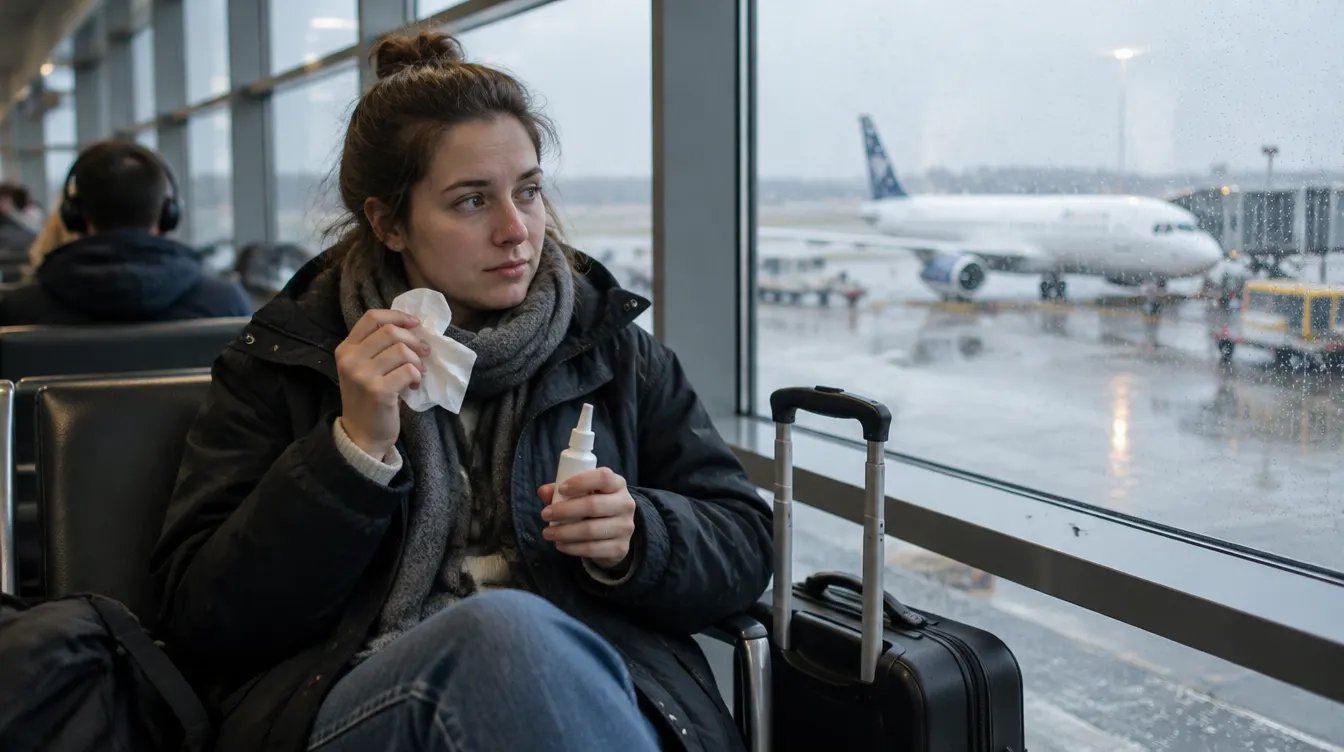
- Decongestant spray, timed right. The MSD Manual suggests a decongestant spray or drops such as oxymetazoline 30 to 60 minutes before ascent or descent. The point is to have it working before the pressure changes, not to reach for it once it hurts.
- Not for everyone, and not for long. The NHS says not to use decongestant sprays for more than 5 days, because they can make a blocked nose worse, and to check with a pharmacist first if you are pregnant or have high blood pressure, heart disease, diabetes, glaucoma or thyroid problems.
- Keep the spray in your hand luggage. It's a liquid, so the liquids rules apply; see liquids in hand luggage.
Babies and children
Children's Eustachian tubes are narrower than adults', ENT Health notes, so they block more easily. KidsHealth, run by the US children's health system Nemours, points out that babies often cry in the last minutes of a flight, as the cabin pressure rises before landing. Often it's the ears, not a tantrum.
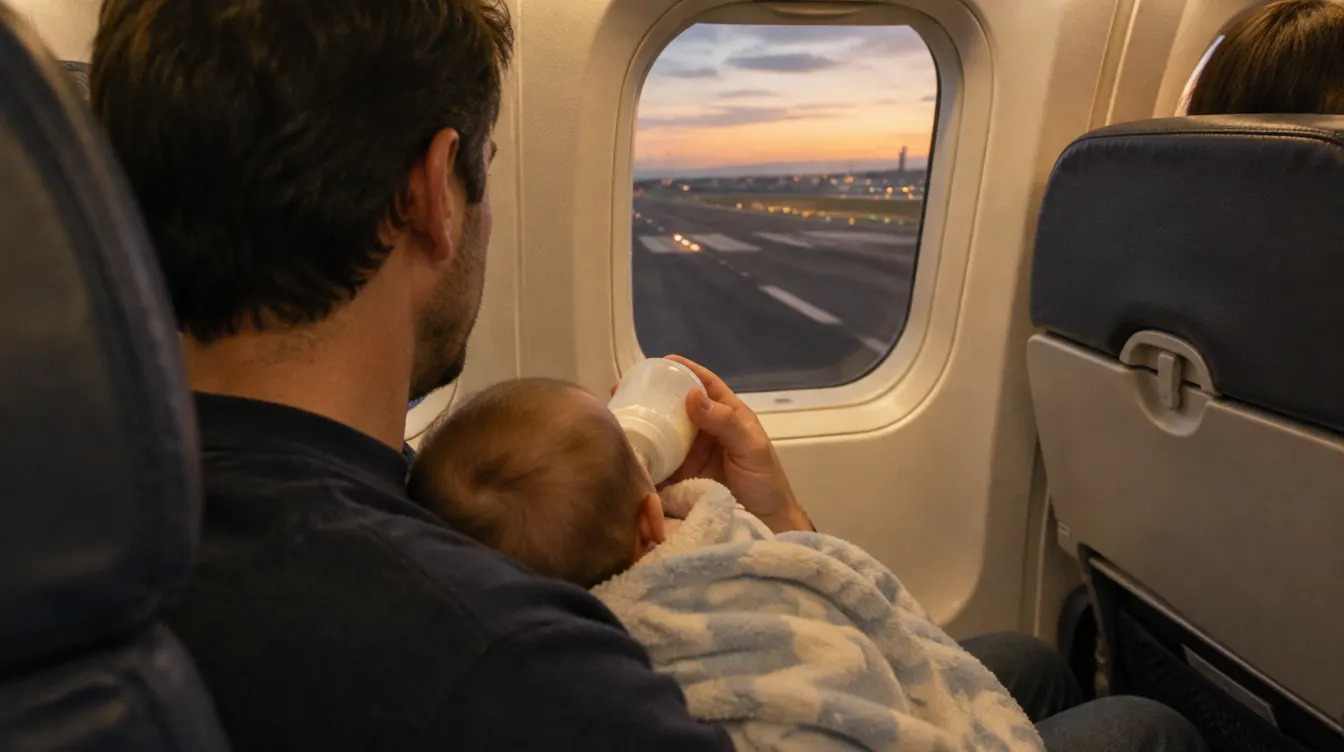
- Babies: breastfeed, give a bottle or a dummy during take-off and landing. If you bottle-feed, keep the baby sitting upright.
- Older children: gum, water, yawning; hard sweets only from age 3, per KidsHealth. Older kids can learn the gentle nose-pinch blow as a game.
- Keep them awake for the descent if you can, for the same reason as adults.
- Pain relief: KidsHealth says a dose of paracetamol (acetaminophen) or ibuprofen about half an hour before take-off or landing can help a child who gets ear pain when flying. Check the dose for their age.
- Ear infection: the doctor may advise delaying the flight until it clears. Children with grommets (ear tubes) usually have an easier time, because the tubes let pressure equalise.
When it's more than a blocked ear
Usually the ear pops open on the ground within minutes or a few hours. MedlinePlus says to contact a doctor if the discomfort lasts more than a few hours, or if you get discharge or bleeding from the ear, fever or severe pain. Complications listed by MedlinePlus include a ruptured eardrum, hearing loss and vertigo, which is why a sudden sharp pain followed by worse hearing deserves a check-up rather than another Valsalva.
Where Bordy fits
Bordy won't open your Eustachian tubes. What it does is tell you the real times, which is what the advice above hangs on. Add your flight by number and Bordy re-checks it against FlightAware data every two minutes, then pushes an alert when departure slips, with the old and new time. If the flight is 50 minutes late, you don't want the baby to finish the bottle at the gate or the decongestant to wear off before take-off.
If the plane has Wi-Fi, Bordy's live status shows the altitude, so you can watch the descent begin and get the gum out in time. And if someone is meeting a family with a small child, they can track the same flight and get the landing alert. Delay alerts and tracking any flight by number are free, with no limit on flights.
Questions people actually ask
Why do my ears hurt more on landing than on take-off?
How do you unblock your ears after a flight?
Is it safe to fly with a cold?
When should I use a nasal decongestant spray before flying?
How do I stop my baby's ears hurting on a plane?
Where these numbers come from
- CDC Yellow Book 2026: Air Travel (cabin pressure, barotrauma) — checked 14 November 2026
- MSD Manual Consumer Version: Barotrauma of the Ear — checked 14 November 2026
- ENT Health (American Academy of Otolaryngology–Head and Neck Surgery): Ears and Altitude (Barotrauma) — checked 14 November 2026
- MedlinePlus (US National Library of Medicine): Ear barotrauma — checked 14 November 2026
- KidsHealth (Nemours): Flying and your child's ears — checked 14 November 2026
- NHS: Decongestants — checked 14 November 2026